Bone Grafting in Ventura, California
Rebuilding bone where it has been lost.
When a tooth is lost, the bone that held it tends to shrink. A bone graft adds material to that area so your body can rebuild it over time. Grafting is most often done to prepare a site for a dental implant.
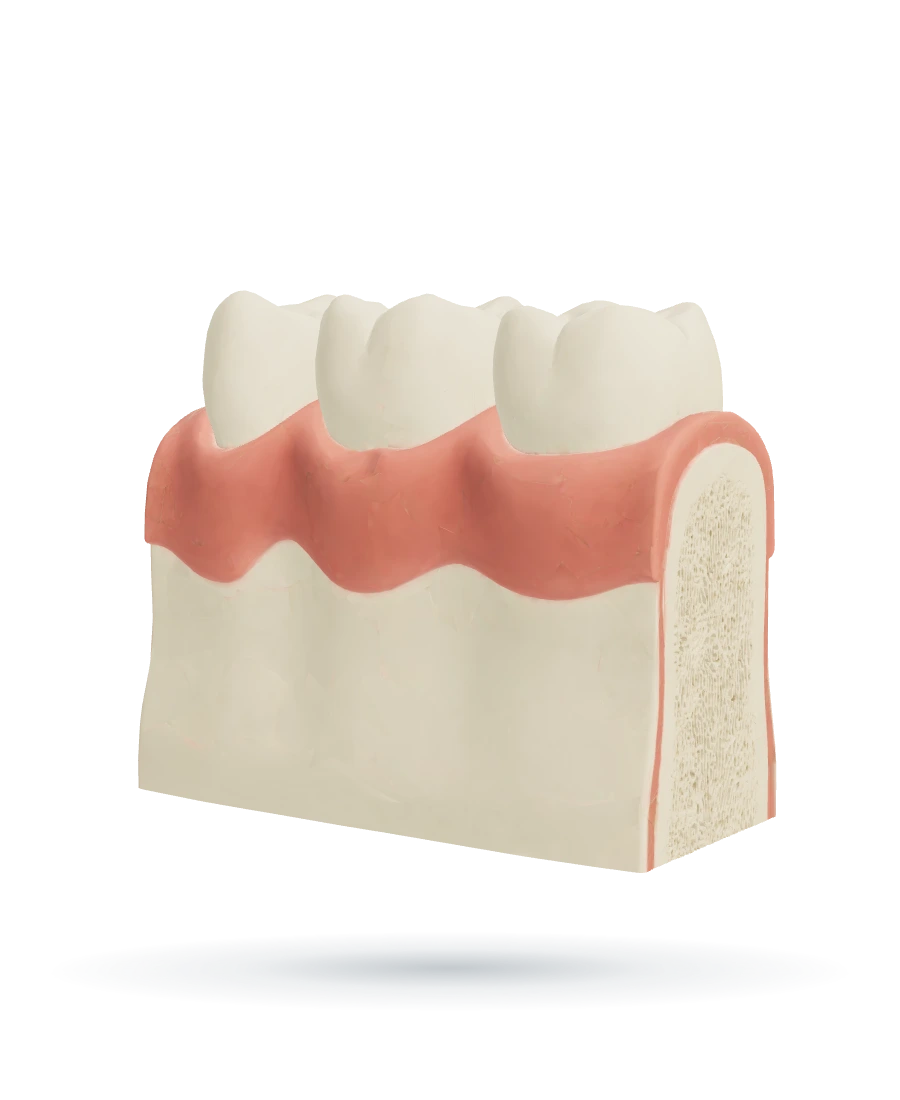
What it is
Jawbone keeps its shape partly because teeth pass chewing forces into it. After a tooth is lost, that stimulation stops and the bone in the area gradually becomes thinner and shorter. Gum disease and long-standing infection can also destroy bone. An implant needs enough bone around it to be stable. At our office, implants are placed by Dr. Ori Levy, a board-certified periodontist.
In a bone graft, grafting material is placed where bone is lacking. It acts as a framework. Over the following months your own bone grows into it and, in many cases, gradually replaces it. The material may come from your own body, from a human donor, from an animal source or from a synthetic substitute.
Grafting varies in scale. A small graft can be placed in the socket at the time of an extraction to help hold its shape. A larger graft can rebuild a ridge that has thinned over the years. Sometimes a graft and an implant can be placed in the same visit, and sometimes the graft must heal first.
Potential benefits
Makes implants possible
Rebuilding bone can allow an implant to be placed where there was not enough bone to hold one before.
Preserves the ridge
A graft placed at the time of an extraction can help limit the shrinkage that normally follows tooth loss.
Support for nearby teeth
In some cases, rebuilding bone lost to gum disease can improve the support around teeth that are still in place.
A base for restorations
A fuller ridge can give a bridge, denture or implant crown a more even foundation and a more natural contour at the gum.
Who may be a candidate
Your dentist may suggest a graft if X-rays show there is not enough bone for the treatment you are planning. Your general health and habits also affect how well a graft heals.
- You want a dental implant but the bone at the site is too thin or too shallow.
- You are having a tooth removed and plan to replace it with an implant later.
- A tooth has been missing for a long time and the ridge has shrunk.
- Gum disease or infection has damaged the bone around a tooth.
- Smoking, diabetes that is not well controlled and some medications can slow healing. Tell us about them before treatment is planned.
What treatment typically involves
The details depend on the size and location of the graft, and your own plan is explained at the consultation.
Examination and X-rays
We examine the area, take X-rays to assess how much bone is present and review your health history and medications.
Choosing the material
Your dentist explains which grafting material is recommended, where it comes from and why, and answers your questions before you decide.
Placing the graft
With the area numbed, the grafting material is placed where bone is needed. It is often covered with a thin protective membrane, and the gum is closed with stitches.
Early recovery
Swelling and soreness are common for a few days. You will be given instructions on eating, cleaning and any medication recommended for you.
Bone healing
Over the following months, your own bone grows into the grafted area. Follow-up visits and X-rays are used to check progress.
Next stage of treatment
Once the site has healed enough, the planned treatment, most often placing a dental implant, can go ahead.
Recovery and aftercare
The site needs careful protection while the gum heals over the graft. Follow the instructions you are given.
- Swelling, soreness and some bruising are common for several days. A cold pack used as directed and pain relief as advised by your dentist can help.
- Eat soft foods and chew on the other side. Avoid hard, crunchy or very hot foods near the graft until you are told otherwise.
- You may notice a few small, sand-like particles in your mouth in the first days. Call the office if you notice a lot of them.
- Do not pull your lip or cheek aside to look at the site, as this can strain the stitches.
- Do not smoke while the graft heals, since smoking raises the risk that it will not heal well.
- Keep your follow-up visits, and call the office if the gum over the graft opens or if swelling or pain gets worse.
What affects the cost
We do not publish a price for bone grafting, because an honest figure depends on your own mouth. These are the things it depends on.
- The size of the area that needs rebuilding.
- The grafting material chosen and whether a protective membrane is used.
- Whether the graft is placed during an extraction or implant visit, or as a separate procedure.
- The X-rays and follow-up visits needed to check healing.
- What your dental insurance covers.
Questions to bring to your consultation
- Do I need a graft, or is there enough bone for an implant already?
- Which grafting material do you recommend for me, and where does it come from?
- Can the graft be placed at the same visit as my extraction or implant?
- How long is the graft likely to need to heal before the next step?
- What should I eat and avoid while it heals?
- What are the risks for someone with my health history?
Common questions
Does bone grafting hurt?
The area is numbed with local anesthetic, so most people feel pressure and movement during the procedure, not pain. Soreness, swelling and some bruising are common for several days afterward and usually ease with the medication your dentist recommends. Contact us if pain gets worse instead of better.
Where does the grafting material come from?
There are four general sources: your own bone, processed bone from a human donor, processed bone from an animal source, and synthetic materials made in a laboratory. Donor and animal materials are treated and sterilized before use. Each suits different situations. Your dentist will explain what is recommended for you, and you can ask about alternatives.
How long does a bone graft take to heal?
The gum usually settles within a couple of weeks, but the bone underneath takes much longer. It commonly needs several months before it is ready for an implant, and larger grafts tend to take longer than small ones. Your dentist will check healing and tell you when the next stage can begin.
Can a graft be done at the same time as an implant?
Sometimes. When only a small amount of extra bone is needed and the implant can be held firmly, both may be done in one visit. When more bone has to be rebuilt, the graft is usually placed first and left to heal. This is decided after your examination and X-rays.
Can a bone graft fail?
Yes, although many heal without problems. A graft can become infected, the gum over it can open, or less bone may form than hoped. Smoking, diabetes that is not well controlled and poor oral hygiene raise the risk. Following your aftercare instructions and attending follow-up visits can help the graft heal.
What should I do after a bone graft?
Follow the instructions you are given. In general, eat soft foods, chew on the other side, avoid disturbing the area with your tongue or fingers, and do not smoke. Keep the rest of your mouth clean, and brush near the site only as directed. Call us if you notice increasing pain, swelling or bleeding.
Related care
- Dental ImplantsA titanium post that takes the place of a missing root and supports a custom crown, bridge or denture.
- Tooth ExtractionsCareful removal of a tooth that cannot be saved, with a plan for healing and for replacing it.
- Implant CrownsA custom crown attached to a dental implant to replace the visible part of a missing tooth.
- Osseous SurgerySurgery that reduces deep gum pockets and reshapes damaged bone so advanced gum disease is easier to control.
- Scaling and Root PlaningA non-surgical deep cleaning that removes plaque and tartar from below the gumline to treat gum disease.
Further reading
All journal articles- How Much Do Dental Implants Cost in Ventura?Why we give no price for a dental implant without an exam, what a treatment includes, what changes the cost, and how to compare quotes like for like.
- Your First Dental Implant ConsultationWhat happens at a first dental implant consultation: what to bring, the health questions, the exam and X-rays, how suitability is judged, and what comes next.
- Do You Need a Bone Graft Before an Implant?Not every implant needs a bone graft. Learn why bone matters, when a graft is recommended, the main types, how recovery goes and how much time it adds.
- What Does a Periodontist Do?A periodontist is a dentist with extra training in the gums and bone that support teeth. Learn what they treat, when you may be referred and what to expect.
- Dental Implants vs Dentures: How to ChooseMissing several or all of your teeth? Compare implants and dentures: how each feels, what it needs from your jaw and health, upkeep, time and cost.
- Dental Implant or Bridge: How to ChooseMissing one tooth? Compare a dental implant with a bridge: what each involves, how long treatment takes, how you care for it, and what to ask your dentist.
Talk it through with a dentist.
Tell us what you would like to talk about and we will reply within one business day to arrange a time.