Restorative Dentistry in Ventura, California
Rebuilding what is damaged or missing.
Restorative dentistry repairs teeth that are broken, worn or decayed and replaces teeth that are missing. At our Ventura office the work is shared: Dr. Tannaz Askari restores teeth with crowns and dentures, and Dr. Ori Levy, a board-certified periodontist, places dental implants.
What it is
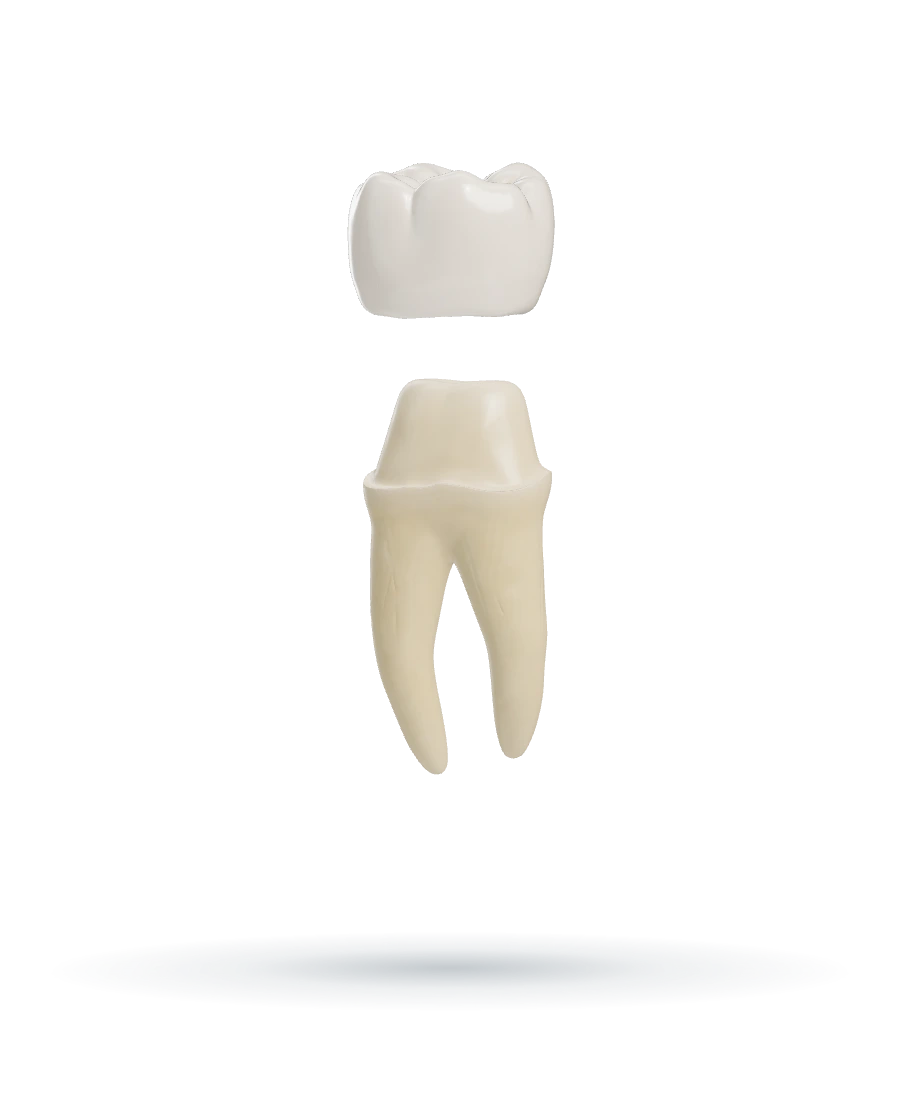
Restorative dentistry is a group of treatments with one aim: a mouth that works comfortably. A crown covers and strengthens a tooth that is cracked, heavily filled or weakened. A bridge fills a gap with artificial teeth anchored to the teeth beside it. A dental implant replaces the root of a missing tooth and carries a crown, a bridge or a denture. Dentures replace several teeth, or all of them, with a removable appliance.
Which of these suits you depends on what is left to work with: how much healthy tooth remains, the condition of the gums and bone, and how your teeth meet when you bite. Most problems can be approached in more than one way, and the options differ in cost, in the number of visits and in how much upkeep they need. We set them out side by side so you can choose.
At Dental Care of Ventura, restorative care is shared between two dentists in one office. Dr. Tannaz Askari, a general and cosmetic dentist with more than 30 years in practice, provides crowns, implant crowns and dentures. Dr. Ori Levy, a board-certified periodontist, places dental implants and treats the gums and bone that every restoration depends on.
Potential benefits
Comfortable chewing
Rebuilding or replacing teeth can make it easier to chew on both sides, which spreads the work across your mouth.
Protecting what remains
A crown can hold a weakened tooth together, and filling a gap can help stop neighboring teeth from drifting into it.
A natural appearance
Restorations are shaped and shaded to sit alongside your own teeth, so repair work does not have to stand out.
A plan, not a patchwork
Looking at the whole mouth first helps treatment happen in a sensible order, instead of one emergency at a time.
Who may be a candidate
Restorative treatment is considered when a tooth can no longer do its job, or is no longer there. An examination, usually with X-rays, shows what can be saved and what the options are.
- You have a tooth that is cracked, broken or worn down.
- You have a large or failing filling and not much healthy tooth left around it.
- You have one or more missing teeth, or a tooth that has to be removed.
- Your denture or bridge no longer fits or works as it should.
- Decay or gum disease may need to be treated first, because restorations depend on a healthy foundation.
What treatment typically involves
The steps are similar whether you need one crown or several teeth replaced.
Examination and X-rays
We look at each tooth, your gums, your bite and the bone that supports your teeth, with X-rays where they are needed.
Understanding your priorities
We ask what bothers you most: pain, chewing, appearance, or a restoration that keeps failing. Your priorities shape the plan.
Setting out the options
For each problem we explain the treatments that could work, what each involves, how long it tends to last and what it costs. Waiting is discussed honestly too.
Preparing the foundation
Decay, infection and gum disease are treated first. Where an implant is planned, the bone is checked and a graft may be discussed.
Building the restoration
Crowns, bridges and dentures are made to fit your mouth, usually over more than one visit. Implants need time to heal before a tooth is attached.
Checkups and upkeep
Restorations need the same care as natural teeth, and regular checkups help find wear or problems early.
What affects the cost
We do not publish a price for restorative dentistry, because an honest figure depends on your own mouth. These are the things it depends on.
- Which treatments you need, from a single crown to replacing several teeth.
- How many teeth are involved.
- The materials chosen for each restoration.
- Whether decay, infection or gum disease must be treated first, or a bone graft is needed.
- What your dental insurance covers.
Questions to bring to your consultation
- Can this tooth be saved, and what are the options if it cannot?
- What are the ways to replace my missing tooth, and how do they compare?
- How long is each option likely to last, and what upkeep does it need?
- Does anything need to be treated before restorative work can start?
- How many visits will my treatment take, and over how long?
- What does the full cost include, and is any part of it likely to be covered by insurance?
Common questions
What is the difference between restorative and cosmetic dentistry?
Restorative dentistry is aimed at function: repairing teeth that are damaged and replacing teeth that are missing. Cosmetic dentistry is aimed at appearance. The two overlap, because a crown or an implant should look natural as well as work well, so they are often planned together.
Should I get a bridge, an implant or a denture?
All three can replace missing teeth, and each has trade-offs. A bridge is fixed in place and relies on the teeth next to the gap. An implant stands on its own and needs enough healthy bone and time to heal. A denture is removable and can replace many teeth at once. The right choice depends on your mouth, your health and your preferences, and is discussed after an examination.
Can a damaged tooth be saved?
Often it can. A filling, a crown, or root canal treatment followed by a crown may allow a tooth to stay. Sometimes a tooth is too broken down or too loose to keep, and removing and replacing it is the more reliable choice. An examination and X-rays are needed to tell which applies.
How long do dental restorations last?
It varies with the type of restoration, the materials, how your teeth meet and how well they are looked after. Crowns, bridges and implants often last many years, and none of them is guaranteed for life. Clenching, grinding and gum disease can shorten their life. Regular checkups help find problems while they are small.
How much does restorative dentistry cost?
Cost depends on which treatments you need, how many teeth are involved, the materials used and whether anything has to be treated first. Because these vary so much from person to person, a figure given without an examination would not mean much. Your cost is confirmed at the consultation, once the options have been discussed.
Who provides restorative dentistry at Dental Care of Ventura?
Dr. Tannaz Askari, DDS, our general and cosmetic dentist, provides crowns, implant crowns and dentures. Dr. Ori Levy, DDS, a board-certified periodontist, places dental implants and carries out bone grafting. Both work in the same office in Ventura.
Related care
- Dental ImplantsA titanium post that takes the place of a missing root and supports a custom crown, bridge or denture.
- Dental CrownsA custom cap that covers a damaged or weakened tooth to restore its shape and strength.
- Dental BridgesA fixed restoration that replaces missing teeth by anchoring artificial teeth to neighboring teeth or implants.
- DenturesRemovable full or partial dentures that replace several or all of your teeth.
- Implant CrownsA custom crown attached to a dental implant to replace the visible part of a missing tooth.
- Full Mouth ReconstructionA staged plan that combines several restorative treatments to rebuild worn, damaged or missing teeth throughout the mouth.
Further reading
All journal articles- Dental Implants vs Dentures: How to ChooseMissing several or all of your teeth? Compare implants and dentures: how each feels, what it needs from your jaw and health, upkeep, time and cost.
- How Much Do Dental Implants Cost in Ventura?Why we give no price for a dental implant without an exam, what a treatment includes, what changes the cost, and how to compare quotes like for like.
- Your First Dental Implant ConsultationWhat happens at a first dental implant consultation: what to bring, the health questions, the exam and X-rays, how suitability is judged, and what comes next.
- Dental Implant or Bridge: How to ChooseMissing one tooth? Compare a dental implant with a bridge: what each involves, how long treatment takes, how you care for it, and what to ask your dentist.
- Crown or Filling: What Decides It?Crown or filling? It depends on how much healthy tooth is left. See what dentists consider, when each is used, the trade-offs and the questions to ask.
- Dentures: Types, Fit and What to ExpectA plain guide to dentures: full, partial and other types, how they are made, what the first weeks feel like, daily care and why the fit changes over time.
Talk it through with a dentist.
Tell us what you would like to talk about and we will reply within one business day to arrange a time.