Root Canals in Ventura, California
Treating the inside of a tooth to keep it.
A root canal treats infection or inflammation in the soft tissue at the center of a tooth. The aim is to relieve the problem and keep your natural tooth in place, instead of removing it. At Dental Care of Ventura, each step is explained before you decide.
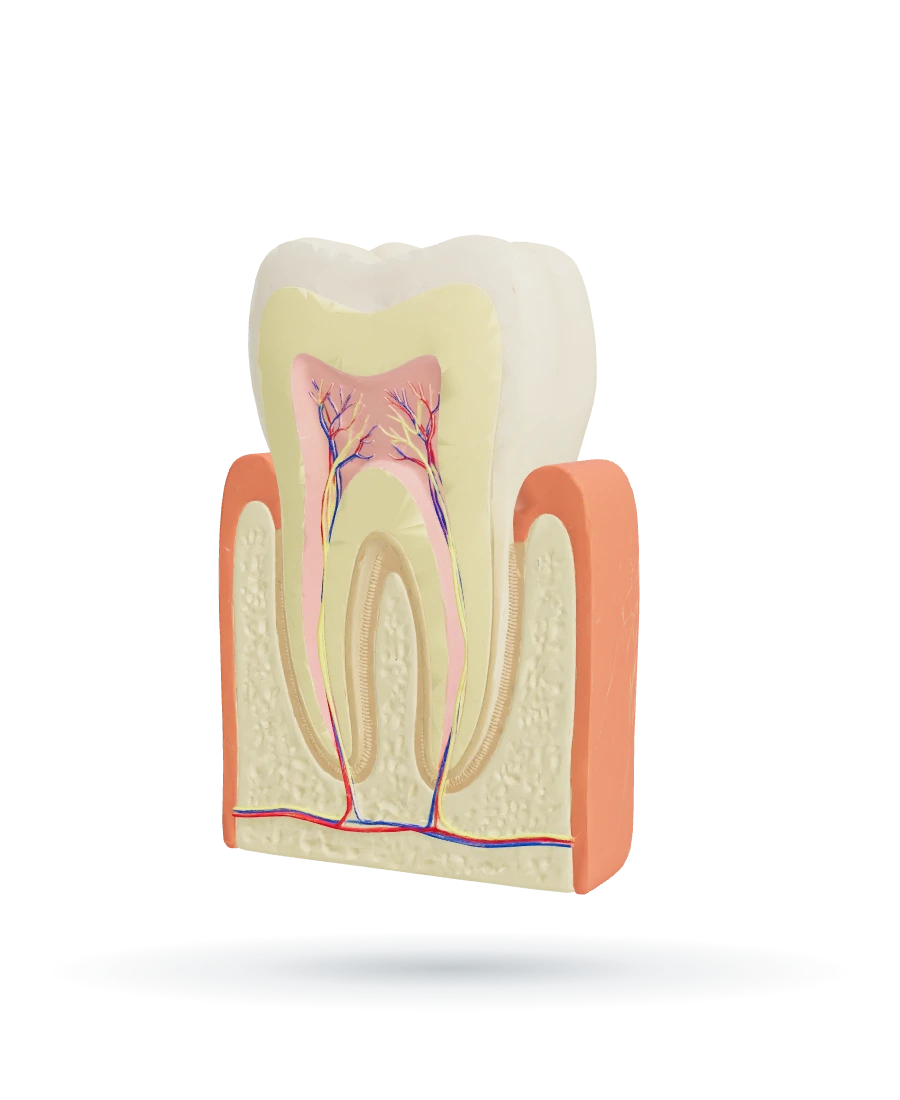
What it is
Under the hard enamel and dentin of every tooth is the pulp, a soft tissue containing nerves and blood vessels. It runs from the center of the tooth down narrow canals in the roots. Deep decay, a crack, an injury or repeated dental work on the same tooth can leave the pulp inflamed or infected.
Root canal treatment removes the damaged pulp, cleans and disinfects the canals, and fills them with a rubber-like material called gutta-percha. Once a tooth is fully grown it no longer depends on the pulp, because the tissues around the root continue to support it. The tooth is then restored, often with a crown, to protect it.
The main alternative to a root canal is removing the tooth and deciding whether to replace it with an implant, bridge or partial denture. Keeping a natural tooth is often the simpler path when the tooth can be restored, but not every tooth is a good candidate. Your dentist will go through both routes with you.
Potential benefits
Relief from tooth pain
Removing inflamed or infected pulp usually resolves the toothache it was causing, though the area can be tender for a few days afterward.
Keeps your natural tooth
A treated and restored tooth can often stay in place and keep working with the teeth around it for many years.
Treats the infection
Cleaning and sealing the canals is meant to remove bacteria from inside the tooth, which can allow the bone around the root to heal.
Avoids a gap
Keeping the tooth means you may not need an implant, bridge or denture to fill the space an extraction would leave.
Who may be a candidate
A root canal is recommended when the pulp is inflamed beyond recovery or infected, and the tooth itself is strong enough to restore. An exam and X-rays are needed to tell.
- You have a lingering toothache, or pain that wakes you at night.
- A tooth stays sensitive to hot or cold long after the food or drink is gone.
- There is swelling, tenderness or a small pimple-like bump on the gum near a tooth.
- A tooth has darkened after an injury, or has a deep crack or cavity.
- Some teeth that need a root canal cause no symptoms and are found on an X-ray.
What treatment typically involves
Treatment may be completed in one visit or spread over two or more, depending on the tooth.
Exam and X-rays
The tooth is examined and tested, and X-rays are taken to see the shape of the roots and any infection in the surrounding bone.
Numbing the tooth
Local anesthetic numbs the tooth and the area around it. The tooth is then kept clean and dry while your dentist works.
Removing the pulp
A small opening is made in the top of the tooth, and the inflamed or infected pulp is removed through it.
Cleaning the canals
The canals are cleaned, shaped and disinfected with fine instruments and rinsing solutions to remove bacteria and debris.
Filling and sealing
The canals are filled with gutta-percha and sealed. A temporary filling often closes the opening until the final restoration is placed.
Final restoration
At a later visit the tooth is rebuilt with a permanent filling or a crown, which helps protect it from fracture and from new infection.
Recovery and aftercare
A treated tooth usually settles over a few days. Protecting it until it is fully restored matters most.
- Wait for the numbness to wear off before eating, then chew on the other side until the tooth has its final filling or crown.
- Tenderness when biting is common for a few days. Pain relief as advised by your dentist can help, and take any prescription exactly as directed.
- A temporary filling is not as strong as the final restoration. Avoid hard or sticky foods on that side until the tooth is restored.
- Keep the appointment for your permanent filling or crown. A tooth left with only a temporary filling for a long time can crack or become reinfected.
- Brush and clean between your teeth as normal, taking a little extra care around the treated tooth.
- Call the office if swelling appears, if pain gets worse after the first few days, if the temporary filling comes out or if your bite feels uneven.
What affects the cost
We do not publish a price for root canals, because an honest figure depends on your own mouth. These are the things it depends on.
- Which tooth is treated, since back teeth usually have more canals than front teeth.
- Whether infection or the shape of the canals makes treatment more involved.
- Whether the tooth has been treated before and needs retreatment.
- The restoration needed afterward, such as a permanent filling or a crown.
- What your dental insurance covers.
Questions to bring to your consultation
- Can this tooth be saved, and what is the outlook after treatment?
- Who will carry out my root canal, and will it be done in this office?
- How many visits should I plan for?
- Will the tooth need a crown afterward?
- What are the alternatives, including extraction, and how do they compare?
- What should I do if the pain or swelling gets worse before my appointment?
Common questions
Is a root canal painful?
The tooth is numbed with local anesthetic, and many people describe the treatment as similar to having a filling placed, only longer. A badly inflamed tooth can be harder to numb, and your dentist can give more anesthetic if needed. Tenderness when biting is common for a few days afterward and usually settles.
How long does a root canal take?
It depends on the tooth. Front teeth usually have one canal, while molars have several and take longer. Some treatments are finished in a single visit, and others need two or more, especially if infection is present. Your dentist can estimate the time once the tooth has been examined.
Will I need a crown after a root canal?
Often, yes, particularly for back teeth. A tooth that needs a root canal has usually lost a lot of structure to decay or fracture, and a crown helps protect what remains from chewing forces. Some front teeth with little damage can be restored with a filling instead. Your dentist will advise which applies.
Can a root canal fail?
Most root canal treatments heal well, but not all. A tooth can become painful or reinfected months or years later, for example if a canal was missed, the tooth cracks or a restoration leaks. Options then may include repeating the treatment, a minor surgical procedure at the root tip, or extraction.
What happens if I do not treat the tooth?
An infected pulp does not heal by itself. The infection can spread to the bone around the root and form an abscess, and pain and swelling may come and go or get worse. In time the tooth may no longer be restorable. If you have facial swelling or a fever, contact a dentist promptly.
Is it better to have a root canal or an extraction?
There is no single answer. Saving a restorable tooth is often preferred because it keeps your own root in the bone. If the tooth is badly cracked or has too little structure left, removing and replacing it may be more predictable. The decision depends on the tooth, your health and your priorities, and is made at the consultation.
Related care
- Dental CrownsA custom cap that covers a damaged or weakened tooth to restore its shape and strength.
- Dental FillingsA repair that replaces decayed tooth structure with a durable material, most often tooth-colored composite.
- Tooth ExtractionsCareful removal of a tooth that cannot be saved, with a plan for healing and for replacing it.
- Dental ImplantsA titanium post that takes the place of a missing root and supports a custom crown, bridge or denture.
- General DentistryExams, cleanings and preventive care that help find and treat dental problems while they are still small.
Further reading
All journal articles- Cracked Tooth: Signs and Treatment OptionsPain when you bite or release can mean a cracked tooth. Learn the signs, the types of crack, how each is treated and what to do until you are seen.
- Toothache: What to Do and When to CallWhat to do for a toothache at home, what not to do, the signs that mean same-day care or the emergency room, and how dentists treat the common causes.
- What Happens During a Root CanalA step-by-step look at root canal treatment: why a tooth needs it, what happens in the chair, how it feels, recovery and why a crown often follows.
- Root Canal vs. Dental ImplantsWhen it comes to dental issues, root canals and dental implants are two common procedures that address different problems but often cause confusion.…
- Crown or Filling: What Decides It?Crown or filling? It depends on how much healthy tooth is left. See what dentists consider, when each is used, the trade-offs and the questions to ask.
- Veneers, Bonding or Crowns: Which Fits?Bonding, porcelain veneers and crowns all change how a tooth looks, but they suit different problems. Compare what each involves and when it fits.
Talk it through with a dentist.
Tell us what you would like to talk about and we will reply within one business day to arrange a time.