Osseous Surgery in Ventura, California
Surgical care for advanced gum disease.
Osseous surgery, also called pocket reduction surgery, is a treatment for advanced gum disease. It is considered when deep cleaning has not been enough to control the infection. At Dental Care of Ventura, periodontal surgery is provided by our board-certified periodontist.
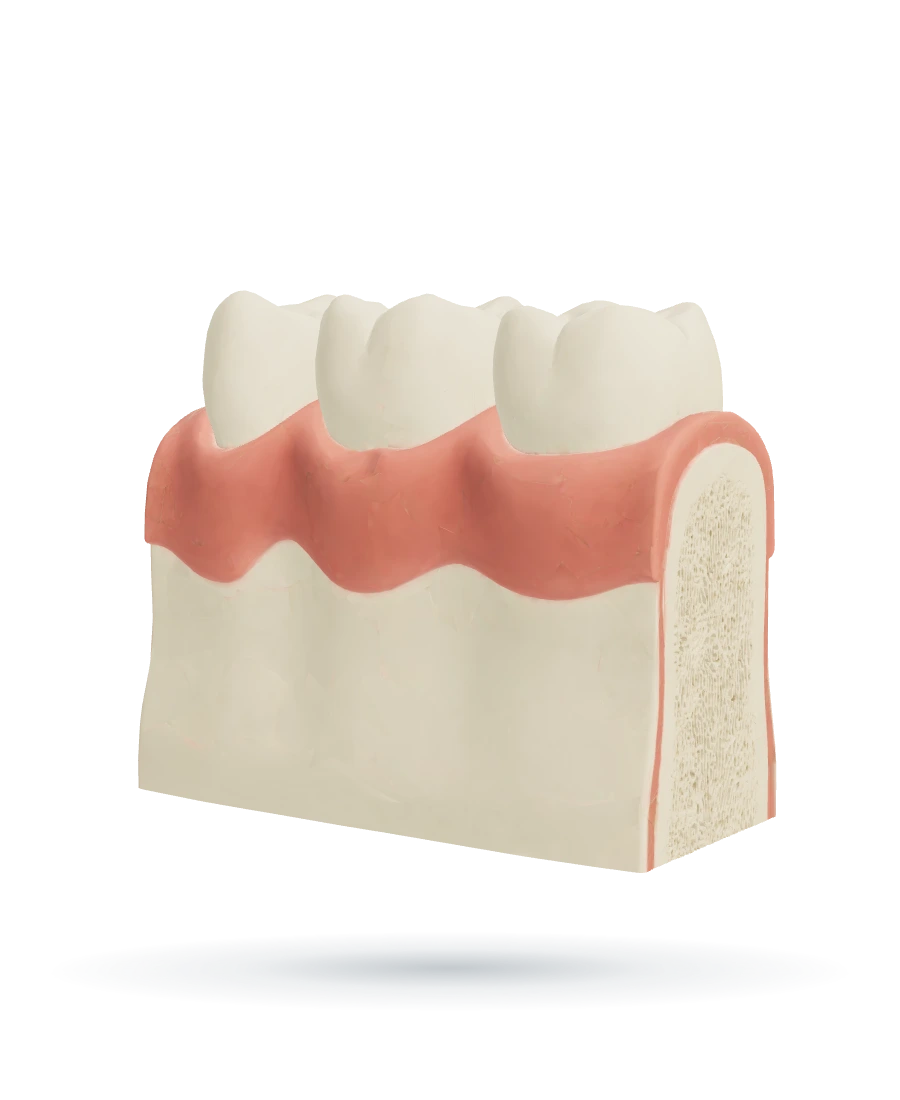
What it is
In advanced gum disease, the gums pull away from the teeth and form deep pockets. Bacteria and tartar collect at the bottom of these pockets, where neither a toothbrush nor a deep cleaning can reach them fully. Over time the infection damages the bone around the teeth, leaving it uneven and pitted.
Osseous means relating to bone. In this surgery, the gum is gently folded back so the roots and bone can be seen and cleaned directly. Tartar and infected tissue are removed, and the bone is smoothed and reshaped to reduce the craters and ledges where bacteria collect. The gum is then repositioned snugly around the teeth and held with stitches.
The aim is shallower pockets that you and your dental team can keep clean. Surgery does not cure gum disease, and it is usually recommended only after non-surgical treatment has been tried. It is performed in our Ventura office, typically one section of the mouth at a time.
Potential benefits
Shallower gum pockets
Reducing pocket depth leaves fewer places for bacteria to collect below the gumline, which can help bring the infection under control.
Easier daily cleaning
With shallower pockets and smoother contours, brushing, cleaning between teeth and professional maintenance can reach more of the tooth surface.
Helps keep natural teeth
Controlling the disease may slow further bone loss and help you keep teeth that would otherwise be at risk.
Direct access to the roots
Folding back the gum lets the periodontist see and clean root surfaces that cannot be reached during a deep cleaning.
Who may be a candidate
Osseous surgery is for people whose gum disease has not responded well enough to scaling and root planing. Whether it is right for you is decided after a periodontal examination.
- Deep pockets remain after scaling and root planing and a period of healing.
- X-rays show bone loss or uneven bone around one or more teeth.
- Your gums continue to bleed or show signs of infection despite good home care.
- You are able to keep up daily cleaning and regular maintenance visits afterward, which the result depends on.
- Tell us if you smoke, have diabetes, or take blood thinners or other regular medications, because these can affect surgery and healing.
What treatment typically involves
Surgery is usually planned after the results of earlier gum treatment have been re-evaluated.
Periodontal evaluation
Your gums are measured, X-rays are reviewed and your health history is checked. The periodontist explains the findings and your options, surgical and non-surgical.
Numbing the area
Local anesthetic is used to numb the section of the mouth being treated before the procedure begins.
Opening and cleaning
The gum is folded back from the teeth. Tartar and infected tissue are removed from the roots and from around the bone.
Reshaping the bone
Uneven or cratered bone is smoothed and recontoured. In some areas a bone graft may be considered to rebuild lost support.
Closing the gum
The gum is placed back around the teeth and secured with stitches. You are given instructions for the first days at home.
Healing and maintenance
Stitches are removed or dissolve as the gum heals. The area is rechecked, and regular periodontal maintenance visits follow to protect the result.
Recovery and aftercare
You will be given instructions for the first days at home. These general points add to them and do not replace them.
- Rest for the remainder of the day. Swelling and soreness are common for several days, and a cold pack and pain relief as advised by your periodontist can help.
- Eat soft foods and chew away from the treated area until you are told it is safe to do otherwise.
- Clean the treated area only as directed, which may mean not brushing there for a time, and keep the rest of your mouth clean as usual.
- Do not smoke while you heal, as smoking can slow healing of the gum and bone.
- Teeth may be sensitive to cold as the gums settle. Mention it at your follow-up visit if it does not ease.
- Call the office if bleeding, swelling or pain gets worse instead of better, or if you develop a fever.
What affects the cost
We do not publish a price for osseous surgery, because an honest figure depends on your own mouth. These are the things it depends on.
- How many sections of the mouth need surgery.
- How advanced the bone loss is in the treated areas.
- Whether a bone graft or other regenerative step is included.
- The follow-up and maintenance visits needed afterward.
- What your dental insurance covers.
Questions to bring to your consultation
- Why is surgery being recommended, and what would happen if I waited?
- Which areas of my mouth need treatment, and how many visits will it take?
- Are there non-surgical or regenerative options for my case?
- How might my gums and teeth look and feel afterward?
- What will recovery involve, and when can I return to normal activities?
- How often will I need maintenance visits after surgery?
Common questions
Is osseous surgery painful?
The area is numbed with local anesthetic, so you should not feel pain during the procedure, though you may notice pressure. Soreness and swelling afterward are normal for several days and are usually managed with medication your periodontist recommends. If you are anxious about surgery, raise it at the consultation.
How long is the recovery?
Many people return to routine activities within a day or two, but this varies. Tenderness and swelling typically ease over the first week or so, and the gums continue to heal for several weeks. You will be given instructions on eating, cleaning the area and follow-up visits.
Will my teeth look different afterward?
They may. When swollen gums heal and pockets are reduced, the gumline often sits lower than before, so teeth can look longer and small spaces may appear between them. Exposed root surfaces can be sensitive to cold for a time. Ask your periodontist what to expect for your own teeth before you decide.
Is there an alternative to surgery?
Sometimes. Depending on the pocket depths and the pattern of bone loss, options may include further deep cleaning with closer maintenance, or regenerative procedures such as bone grafting. In some cases, removing a tooth with a poor outlook is discussed. The right approach depends on an examination, so it is decided case by case.
Does osseous surgery cure gum disease?
No. Surgery reduces the pockets and makes the disease easier to control, but gum disease can return if plaque builds up again. Long-term results depend on thorough daily cleaning, regular periodontal maintenance and managing risk factors such as smoking and diabetes.
Who performs osseous surgery at Dental Care of Ventura?
Periodontal surgery at our office is provided by a board-certified periodontist, a dentist with additional specialty training in the gums and the bone that supports the teeth. Your first step is a periodontal evaluation, where the findings and options are explained before any decision is made.
Related care
- Scaling and Root PlaningA non-surgical deep cleaning that removes plaque and tartar from below the gumline to treat gum disease.
- Bone GraftingA procedure that adds bone or a bone substitute to the jaw, often to prepare for an implant.
- Dental ImplantsA titanium post that takes the place of a missing root and supports a custom crown, bridge or denture.
- Tooth ExtractionsCareful removal of a tooth that cannot be saved, with a plan for healing and for replacing it.
Further reading
All journal articles- Receding Gums: Causes and TreatmentReceding gums expose the tooth root and do not grow back. Learn the common causes, how to keep recession from getting worse and which treatments may help.
- What Does a Periodontist Do?A periodontist is a dentist with extra training in the gums and bone that support teeth. Learn what they treat, when you may be referred and what to expect.
- Early Signs of Gum DiseaseBleeding, red or puffy gums and lasting bad breath can be early signs of gum disease. Learn what to look for, who is at risk and when to see a dentist.
- Deep Cleaning vs Regular CleaningA regular cleaning maintains healthy gums. A deep cleaning treats gum disease below the gumline. See how they differ and how a dentist decides between them.
- Gum Health and the Rest of Your BodyResearchers have observed links between gum disease and conditions such as diabetes and heart disease. Here is what is known, what is not and what to do.
- Why Do My Gums Bleed When I Brush?Gums usually bleed because plaque at the gumline has inflamed them. Learn the other causes, what to do at home and when bleeding needs a dental visit.
Talk it through with a dentist.
Tell us what you would like to talk about and we will reply within one business day to arrange a time.