Dental Fillings in Ventura, California
Repairing a cavity while it is small.
A filling repairs a tooth after decay has been removed, sealing the space so the tooth can keep working. At our Ventura office, Dr. Tannaz Askari will look at the size and position of the cavity and explain which material suits it.
What it is
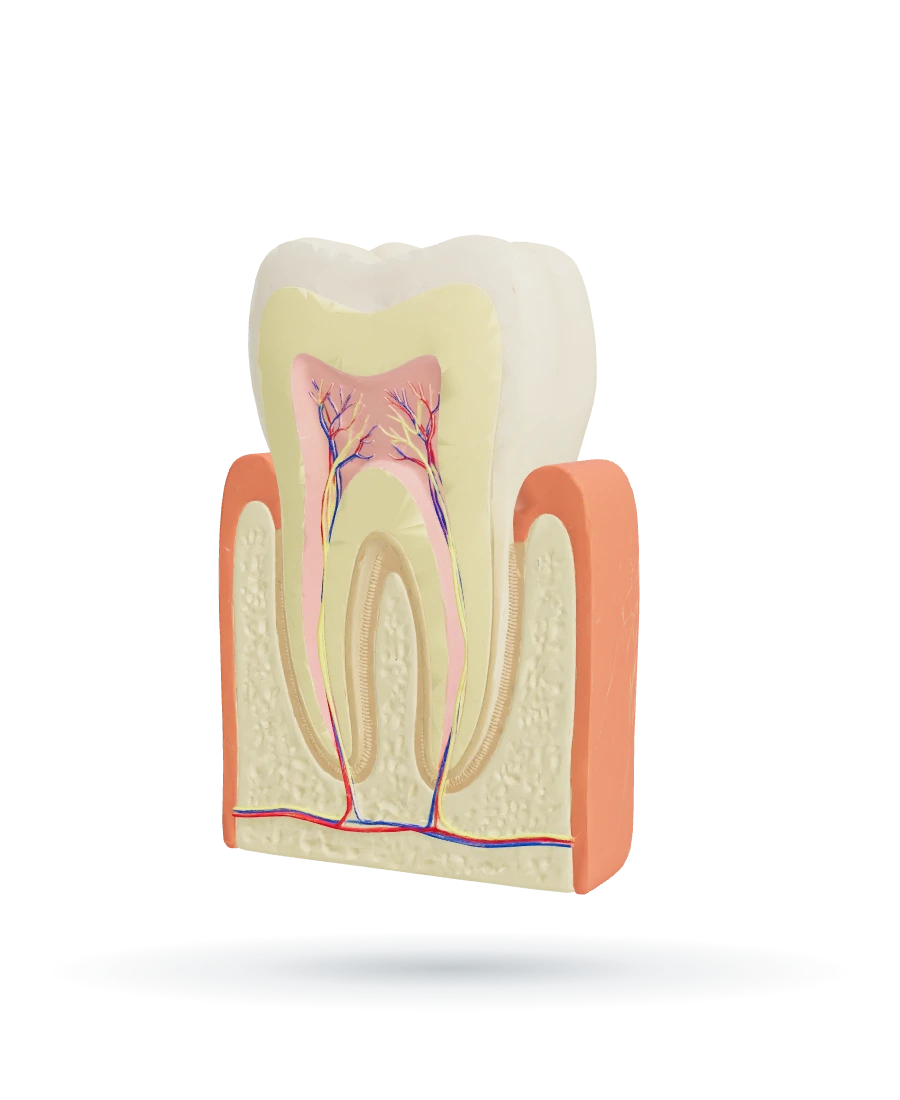
A cavity is a spot where acids made by bacteria in plaque have dissolved part of the tooth. It does not heal on its own once it has broken through the enamel. A filling is meant to stop the damage from spreading: the softened tooth structure is removed and the space is rebuilt with a filling material.
Most fillings today are made of composite resin, a tooth-colored material that is bonded to the tooth and matched to its shade. Silver amalgam is the traditional alternative. It is durable but dark in color, and it contains mercury bound into a metal alloy. If you have questions about either material, we are glad to go through them with you.
When a cavity or an old filling is too large for a standard filling but the tooth does not need a full crown, a porcelain inlay or onlay may be an option. These are made outside the mouth to fit the prepared tooth and then bonded in place. An onlay also covers one or more of the chewing points of the tooth.
Potential benefits
Stops decay from spreading
Removing decay and sealing the tooth can keep a small cavity from growing toward the nerve, where treatment becomes more involved.
Blends with your tooth
Composite is matched to the shade of your tooth, so a filling is usually hard to notice when you talk or smile.
Conserves tooth structure
Because composite bonds to the tooth, your dentist can often remove little more than the decayed area itself.
Usually one visit
Most direct fillings are placed and finished in a single appointment. Inlays and onlays typically take more than one.
Who may be a candidate
A filling is usually recommended when an exam or X-ray shows decay, or when part of a tooth or an older filling has broken down. Your dentist will confirm what each tooth needs.
- You have a cavity that has been found at an exam or on an X-ray.
- A tooth is sensitive to sweets, cold or biting, which can be a sign of decay.
- An existing filling is cracked, worn, loose or has decay around its edge.
- A tooth has a small chip or fracture that can be rebuilt without a crown.
- The tooth still has enough healthy structure to hold a filling. If not, an onlay or crown may be discussed.
What treatment typically involves
A tooth-colored filling is usually completed in one visit.
Exam and diagnosis
Your dentist examines the tooth and reviews X-rays to see how deep the decay goes, then explains the options for repairing it.
Numbing the tooth
A local anesthetic is used to numb the tooth and the area around it. Very shallow cavities sometimes need little or none.
Removing the decay
The decayed and softened part of the tooth is removed, and the space is cleaned and shaped to hold the filling.
Placing the filling
For composite, the tooth is prepared with a bonding agent. The material is then placed in layers, and each layer is hardened with a curing light.
Shaping and polishing
The filling is shaped to match the tooth, your bite is checked and adjusted, and the surface is polished smooth.
After the visit
Numbness usually wears off within a few hours. Some sensitivity to cold or pressure is common for a short time and typically settles.
Recovery and aftercare
Recovery after a filling is usually short, but a few points help in the first days.
- Wait until the numbness has fully worn off before you eat or have hot drinks, so you do not bite or burn your lip, cheek or tongue.
- Some sensitivity to cold, sweet foods or biting pressure is common for a short time. It usually fades over the following days.
- If your bite still feels high or uneven once the numbness has gone, call the office so it can be checked and adjusted.
- Brush twice a day and clean between your teeth as usual, including around the new filling.
- Call us if sensitivity gets worse instead of better, if pain lingers, or if the filling feels rough, cracked or loose.
- Keep your regular checkups, so the filling can be checked for wear and its edges for new decay.
What affects the cost
We do not publish a price for dental fillings, because an honest figure depends on your own mouth. These are the things it depends on.
- How many teeth need fillings, and how large each cavity is.
- Which surfaces of the tooth the filling has to cover.
- The material chosen, such as composite or, where suitable, a porcelain inlay or onlay.
- Whether X-rays or other treatment are needed first.
- What your dental insurance covers.
Questions to bring to your consultation
- How large is the cavity, and is a filling enough to repair it?
- Which filling material do you recommend for this tooth, and why?
- Would an inlay, onlay or crown be a better long-term choice here?
- Do any of my older fillings need to be replaced?
- What can I do to lower my risk of new cavities?
- What will this cost, and what might my insurance cover?
Common questions
Does getting a filling hurt?
The tooth is numbed with local anesthetic first, so most people feel pressure and vibration rather than pain. The injection itself can pinch briefly. If you feel anything sharp during the visit, tell your dentist so more anesthetic can be given.
How long do fillings last?
There is no fixed lifespan. Many fillings last for years, but how long depends on the size and position of the filling, the material, your bite and how well the tooth is kept clean. Fillings are checked at each exam so that wear or leakage can be dealt with early.
Are silver amalgam fillings safe?
Amalgam contains mercury bound into a metal alloy. The FDA and the American Dental Association consider it a safe and durable material for most people. The FDA suggests that certain groups, including people who are pregnant or nursing and young children, use other materials where appropriate. If you have concerns, raise them at your visit.
Should I replace my old metal fillings?
Not necessarily. Fillings that are intact and free of decay generally do not need to be replaced, and removing a sound filling takes away some healthy tooth. Replacement is usually considered when a filling is cracked, worn or leaking, or if its appearance bothers you. Your dentist can check each one.
What is the difference between a filling, an inlay and an onlay?
A filling is shaped directly in the tooth during one visit. An inlay or onlay is made outside the mouth, often from porcelain, and bonded in. An inlay sits within the chewing surface. An onlay extends over one or more of the pointed cusps. They are generally used for larger areas of damage.
How soon can I eat after a filling?
Composite fillings are hardened during the appointment, so the filling itself is ready to use. It is sensible to wait until the numbness has worn off before eating, so you do not bite your cheek, lip or tongue. If your bite feels high or uneven afterward, call the office for an adjustment.
Related care
- General DentistryExams, cleanings and preventive care that help find and treat dental problems while they are still small.
- Dental CrownsA custom cap that covers a damaged or weakened tooth to restore its shape and strength.
- Root CanalsTreatment that removes inflamed or infected pulp from inside a tooth, then seals it so the tooth can stay.
- Cosmetic DentistryAn overview of the ways we can change the color, shape and alignment of your teeth, from whitening to veneers.
Further reading
All journal articles- Crown or Filling: What Decides It?Crown or filling? It depends on how much healthy tooth is left. See what dentists consider, when each is used, the trade-offs and the questions to ask.
- How Cavities Form and How Fillings Fix ThemHow tooth decay starts, the stages a cavity goes through, why early cavities rarely hurt, and what happens step by step when a dentist places a filling.
- Sensitive Teeth: Causes and What HelpsSensitive teeth are usually caused by exposed dentin from worn enamel or receding gums. Learn the causes, what helps at home and when to see a dentist.
- How to Choose a Dentist in VenturaA checklist for choosing a dentist in Ventura: licensing, range of care, how options are explained, practical matters, emergencies and reviews.
- Early Signs of Gum DiseaseBleeding, red or puffy gums and lasting bad breath can be early signs of gum disease. Learn what to look for, who is at risk and when to see a dentist.
- What Happens at a Dental Exam and CleaningA step-by-step look at a routine dental exam and cleaning: health history, the examination, X-rays, the cleaning itself and the questions worth asking.
Talk it through with a dentist.
Tell us what you would like to talk about and we will reply within one business day to arrange a time.