Dentures in Ventura, California
Removable teeth, made to fit you.
Dentures are removable replacements for missing teeth. A partial denture fills gaps between teeth you still have, and a full denture replaces every tooth in the upper or lower jaw. At Dental Care of Ventura, dentures are provided by Dr. Tannaz Askari.
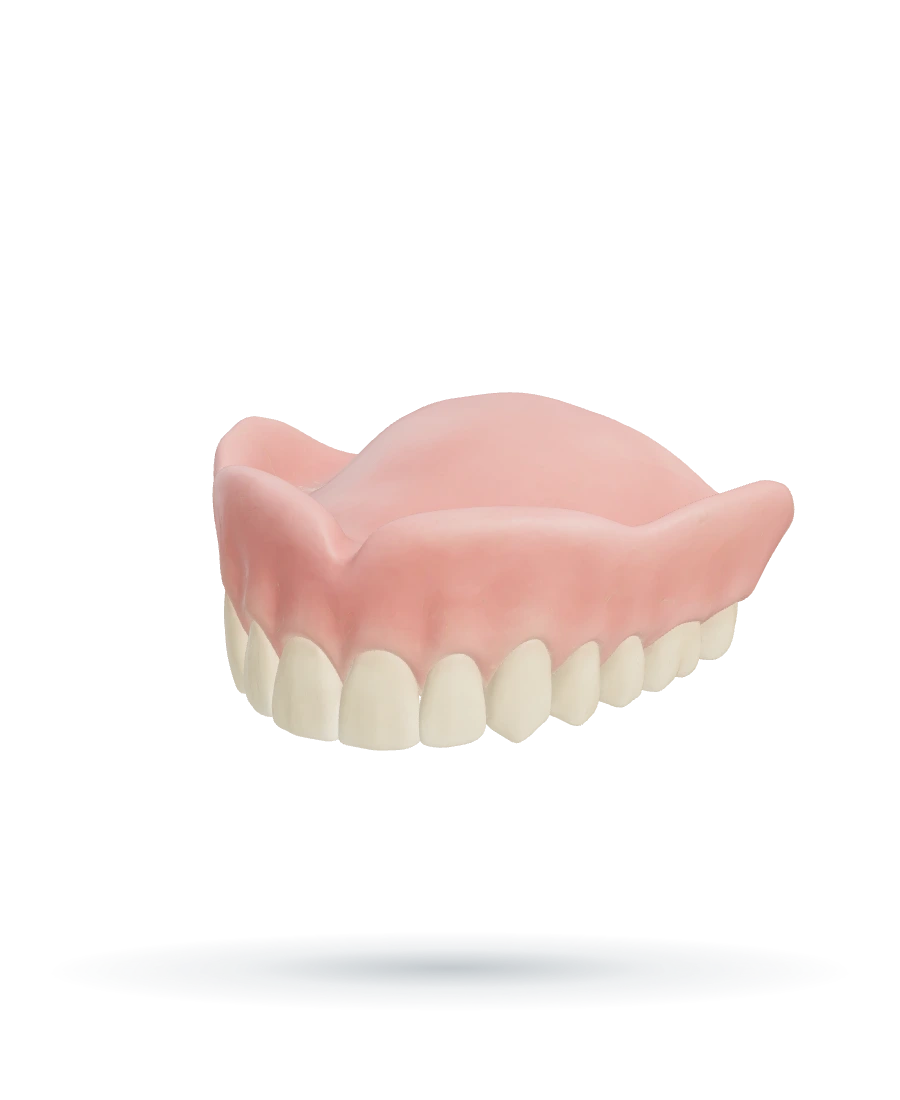
What it is
A denture is a set of artificial teeth fixed to a base that rests on your gums. A full denture replaces all the teeth in one jaw. A partial denture replaces some of them and fits around the teeth that remain, often held in place by small clasps or a metal framework.
A temporary denture can fill a space for a limited time, for example while your gums heal after an extraction or while you wait for other treatment. It is meant as a short-term measure, not a long-term replacement. Your dentist will tell you how long it is intended to be worn.
Dentures do not feel the same as natural teeth, and it is normal to need a period of adjustment. The fit also changes over the years as the gums and bone beneath reshape. Follow-up visits, adjustments and occasional relining are part of wearing dentures comfortably.
Potential benefits
No surgery to fit
Making and fitting a denture does not involve surgery, although some people need teeth removed first.
Replaces many teeth at once
One denture can replace several teeth or a full arch, which can make it a practical option when many teeth are missing.
Support for eating and speech
Replacing missing teeth can make chewing and speaking easier, though both take some practice with a new denture.
Can be adjusted
A denture can often be adjusted, relined or repaired as your mouth changes, and teeth can sometimes be added to a partial.
Who may be a candidate
Dentures can suit people who are missing several teeth or all of them. An examination shows which type fits your situation and whether other options are worth comparing.
- You are missing several teeth, or all of the teeth in one or both jaws.
- Some of your remaining teeth cannot be saved and need to be removed.
- You would prefer a replacement that does not involve implant surgery.
- You need something to fill a space for a short time while other treatment is completed.
- Your current denture is loose, worn or uncomfortable and may need relining or replacing.
What treatment typically involves
A denture is made over several visits so the fit, bite and appearance can be checked along the way.
Examination and discussion
We examine your mouth, take X-rays where needed and talk through full, partial and temporary dentures alongside other ways to replace teeth.
Preparing your mouth
If any teeth cannot be kept, they are removed. Your dentist will explain how long the gums should heal before the next stage.
Impressions and bite records
Impressions of your gums and any remaining teeth are taken, along with measurements of how your upper and lower jaws meet.
Trial fitting
A trial version, often set in wax, lets you and your dentist check the fit, bite and look of the teeth before the denture is finished.
Fitting your denture
The finished denture is placed and adjusted. We go over how to put it in, take it out, clean it and store it.
Adjustments and review
Sore spots are common at first and are usually relieved with small adjustments. Regular visits let us check the fit and your gums.
Recovery and aftercare
Getting used to a denture takes time, and follow-up visits are part of the process.
- Sore spots are common in the first weeks. Do not try to adjust the denture yourself; call the office so it can be eased.
- Start with soft foods, chewing slowly on both sides at once, and add firmer foods gradually as you get used to it.
- Clean your denture daily as you were shown, and brush your gums, tongue and any remaining teeth too.
- Unless you are told otherwise, take the denture out at night to rest your gums, and keep it moist so it does not dry out.
- Your gums and bone change shape over time. If the denture becomes loose or uncomfortable, have it checked rather than relying on adhesive.
- Keep regular checkups, even with a full denture, so the fit and the health of your mouth can be checked.
What affects the cost
We do not publish a price for dentures, because an honest figure depends on your own mouth. These are the things it depends on.
- Whether you need a full or partial denture, and for one jaw or both.
- The materials and design, such as the type of base or framework.
- Whether teeth need to be removed or other treatment completed first.
- Whether a temporary denture is needed while you heal.
- What your dental insurance covers.
Questions to bring to your consultation
- Would a full or a partial denture suit me, and what would hold it in place?
- Can any of my remaining teeth be kept?
- Will I be without teeth at any point during treatment?
- How will my denture feel when I eat and speak, and how long does it usually take to adjust?
- How often will my denture need adjusting, relining or replacing?
- Would implants or a bridge be an option for me instead?
Common questions
Are dentures comfortable?
A new denture usually feels bulky at first, and you may notice more saliva or a few sore spots. For most people this eases as the mouth adapts, and small adjustments can relieve pressure points. A denture will not feel the same as natural teeth, but a careful fit and follow-up visits can make a real difference.
How long does it take to get used to dentures?
It varies from person to person. Many people need several weeks to feel at ease eating and speaking. Starting with soft foods cut into small pieces and practicing reading aloud can help. If something still feels wrong after the first adjustments, let us know so we can look at the fit.
Will dentures change how I eat and speak?
At first, yes. Chewing with a denture takes practice, and some foods are harder to manage than others. Certain words may sound different for a while. Most people improve steadily with practice. Lower full dentures tend to be less stable than upper ones, which is worth discussing at your consultation.
How do I care for my dentures?
Take them out and brush them daily with a soft brush and a denture cleaner, not regular toothpaste, which can scratch the surface. Dentures are usually left out overnight and kept in water or a soaking solution. Clean your gums, tongue and any remaining teeth as well. Handle your denture over a towel or a basin of water in case you drop it.
How long do dentures last?
There is no set lifespan. The teeth and base wear with use, and the shape of your gums and jawbone changes over time, so a denture that once fit well can become loose. Relining can improve the fit for a while. Eventually most dentures need to be remade. Regular checkups help us judge when.
What are the alternatives to dentures?
Depending on how many teeth are missing and the condition of your mouth, alternatives can include a fixed bridge or dental implants. In some cases implants can also be used to steady a denture. Each option has its own advantages, limits and costs. We can go through the ones that apply to you at a consultation.
Related care
- Dental ImplantsA titanium post that takes the place of a missing root and supports a custom crown, bridge or denture.
- Dental BridgesA fixed restoration that replaces missing teeth by anchoring artificial teeth to neighboring teeth or implants.
- Tooth ExtractionsCareful removal of a tooth that cannot be saved, with a plan for healing and for replacing it.
- Full Mouth ReconstructionA staged plan that combines several restorative treatments to rebuild worn, damaged or missing teeth throughout the mouth.
- General DentistryExams, cleanings and preventive care that help find and treat dental problems while they are still small.
Further reading
All journal articles- Dental Implants vs Dentures: How to ChooseMissing several or all of your teeth? Compare implants and dentures: how each feels, what it needs from your jaw and health, upkeep, time and cost.
- Dentures: Types, Fit and What to ExpectA plain guide to dentures: full, partial and other types, how they are made, what the first weeks feel like, daily care and why the fit changes over time.
- Your Options for Replacing a Missing ToothCompare the ways to replace a missing tooth: dental implant, fixed bridge or partial denture. What each involves, how they differ and when a gap can be left.
- How Much Do Dental Implants Cost in Ventura?Why we give no price for a dental implant without an exam, what a treatment includes, what changes the cost, and how to compare quotes like for like.
- Your First Dental Implant ConsultationWhat happens at a first dental implant consultation: what to bring, the health questions, the exam and X-rays, how suitability is judged, and what comes next.
- Dental Implant or Bridge: How to ChooseMissing one tooth? Compare a dental implant with a bridge: what each involves, how long treatment takes, how you care for it, and what to ask your dentist.
Talk it through with a dentist.
Tell us what you would like to talk about and we will reply within one business day to arrange a time.