Porcelain Veneers in Ventura, California
A new front surface, made to fit.
A veneer is a thin porcelain shell bonded to the front of a tooth to change its color, shape or size. At our Ventura office, veneers are planned and placed by Dr. Tannaz Askari, after an examination to check they suit your teeth.
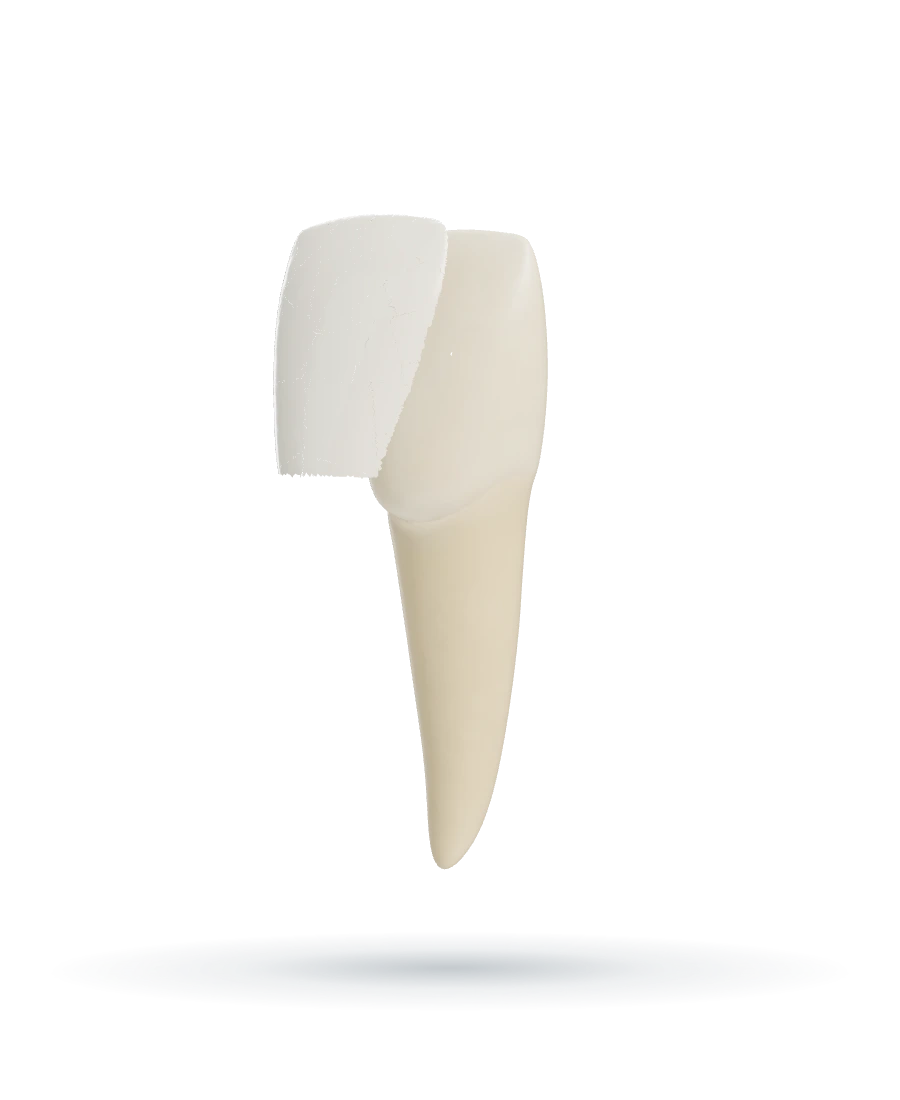
What it is
A porcelain veneer is a thin, custom-made ceramic shell that covers the front surface of a tooth. It is bonded in place with dental cement. Veneers are most often used on the upper front teeth to mask stains that whitening cannot lift, close small gaps, repair chips, or even out teeth that are worn or uneven in shape.
To make room for the porcelain, a thin layer of enamel is usually removed from the front of the tooth. Enamel does not grow back, so a prepared tooth will always need a veneer or another covering. This is the main thing to weigh before choosing veneers, and it is why we look at more conservative options with you first.
Porcelain is not the only material. Veneers can also be built from tooth-colored composite resin, which is usually quicker and costs less but tends to stain and wear sooner. In some cases a veneer can be placed with little or no enamel removal. Dr. Askari will tell you which approaches are realistic for your teeth.
Potential benefits
Resistant to staining
Glazed porcelain resists staining from coffee, tea and red wine more than natural enamel or composite resin does.
Several changes at once
One veneer can alter the shade, shape and length of a tooth together, which may avoid the need for separate treatments.
Less reshaping than a crown
A veneer covers only the front of a tooth, so it typically requires less tooth to be removed than a full crown.
A natural appearance
Porcelain lets some light pass through, much as enamel does. Shade and shape are chosen to sit comfortably beside your other teeth.
Who may be a candidate
Veneers suit adults with healthy teeth and gums who want to change the look of their front teeth. An examination is needed to confirm there is enough sound enamel to bond to.
- Your front teeth are stained or discolored in a way that whitening has not improved.
- You have chipped, worn, uneven or slightly misshapen teeth.
- You have small gaps between teeth that you would like closed.
- Your teeth and gums are free of untreated decay and gum disease.
- Heavy clenching or grinding can chip or loosen veneers. Tell us if you do either, as a night guard may be advised.
What treatment typically involves
Porcelain veneers usually take two or more visits, and your own plan is set at the consultation.
Consultation and planning
We examine your teeth and gums, take any X-rays needed and talk about what you want to change. Alternatives such as whitening or aligners are discussed too.
Preparing the teeth
With the area numbed if needed, a thin layer of enamel is removed from the front of each tooth to make space for the veneer.
Impression and shade
An impression or scan of the prepared teeth is taken and a shade is chosen. These go to the dental laboratory that makes your veneers.
Temporary veneers
Temporary coverings may be placed while the laboratory works. They are less sturdy than the final veneers, so softer foods are sensible.
Fitting and bonding
Each veneer is tried in and checked for fit and color. Adjustments are made if needed, and the veneer is then bonded to the tooth with dental cement.
Review and care
A follow-up visit may be arranged to check your bite and gums. Brush and floss as usual, and keep regular checkups so the veneers can be monitored.
Recovery and aftercare
Veneers need much the same care as natural teeth, with a few extra precautions.
- Your teeth may feel sensitive to hot and cold for a short time after preparation or bonding. Let us know if it lingers.
- While you have temporary veneers, choose softer foods and avoid biting into hard or sticky foods with your front teeth.
- Avoid biting on ice, pens, fingernails or packaging, since porcelain can chip under sudden force.
- If you clench or grind your teeth, wear a night guard if your dentist recommends one.
- Brush twice a day and clean between your teeth daily. The tooth under a veneer can still decay at its edges, especially near the gumline.
- Keep regular checkups so your veneers, the edges where they meet your teeth and your gums can be checked over time.
What affects the cost
We do not publish a price for porcelain veneers, because an honest figure depends on your own mouth. These are the things it depends on.
- How many teeth are being treated.
- Whether porcelain or composite is chosen.
- The laboratory work involved in making each veneer.
- Whether other treatment, such as fillings, gum care or whitening, is needed first.
- What your dental insurance covers, if anything.
Questions to bring to your consultation
- Could whitening or aligners achieve what I want without veneers?
- How much enamel would need to be removed from my teeth?
- How many veneers would I need for an even result?
- Am I suited to porcelain, composite or a minimal-preparation veneer?
- What happens if a veneer chips or comes off?
- What does the cost include, and how does the number of veneers affect it?
Common questions
Are veneers permanent?
The change to your tooth is permanent, because the enamel removed to fit a veneer does not grow back. The veneer itself is not. Many porcelain veneers last ten years or longer with good care, but they can chip, loosen or need replacing over time. You should expect to maintain or replace them in the future.
Does getting veneers hurt?
Preparation is usually done with local anesthetic, so most people feel little during the visit. Some sensitivity to hot and cold is common for a short time afterward, because a little enamel has been removed. Tell us if sensitivity continues or your bite feels uneven, as a small adjustment may help.
What is the difference between porcelain and composite veneers?
Porcelain veneers are made in a dental laboratory and bonded at a later visit. They tend to resist stains and wear well. Composite veneers are shaped directly on the tooth, often in one visit, and usually cost less, but they tend to stain and chip sooner and may need more upkeep. Which is suitable depends on your teeth and goals.
Can veneers be placed without removing enamel?
Some veneers can be bonded with little or no enamel removed. They suit only certain teeth, for example teeth that are small or set back, because adding porcelain to a full-sized tooth can make it look bulky. Even then, the tooth surface is etched for bonding, so the result should not be assumed to be fully reversible. Ask whether this applies to you.
Can veneers be whitened?
No. Whitening gel lightens natural enamel but does not change the color of porcelain or composite. If you would like lighter teeth overall, whitening is usually done before veneers are made, so the veneers can be matched to the new shade.
How much do porcelain veneers cost?
Cost depends on the number of veneers, the material chosen, the laboratory work involved and any treatment needed first, such as fillings or gum care. Because of this, a meaningful figure can only be given after an examination. Your cost is confirmed at the consultation.
Related care
- Cosmetic DentistryAn overview of the ways we can change the color, shape and alignment of your teeth, from whitening to veneers.
- Teeth WhiteningIn-office whitening that uses a peroxide gel to lighten the shade of natural teeth.
- Dental CrownsA custom cap that covers a damaged or weakened tooth to restore its shape and strength.
- Invisalign and Clear AlignersA series of clear, removable trays that gradually move teeth into straighter positions.
Further reading
All journal articles- Porcelain Veneers: Cost and How Long They LastHow long porcelain veneers last, what wears them out and what helps, plus what the cost of veneers depends on and how to compare quotes fairly.
- Porcelain Veneers: What to Know Before You DecidePorcelain veneers can change the color and shape of front teeth, but enamel is removed and the step is permanent. What to weigh before you decide.
- Veneers, Bonding or Crowns: Which Fits?Bonding, porcelain veneers and crowns all change how a tooth looks, but they suit different problems. Compare what each involves and when it fits.
- Why Teeth Change Color and What HelpsTeeth darken from surface stains, age, injury, medicines and dental work. Learn how to tell the causes apart, what helps each, and when to see a dentist.
- How to Choose a Dentist in VenturaA checklist for choosing a dentist in Ventura: licensing, range of care, how options are explained, practical matters, emergencies and reviews.
- Clear Aligners vs Braces for AdultsClear aligners or fixed braces as an adult? Compare how each works, daily life with both, which problems suit which, and why retainers matter afterward.
Talk it through with a dentist.
Tell us what you would like to talk about and we will reply within one business day to arrange a time.