Invisalign and Clear Aligners in Ventura, California
Straightening teeth, a little at a time.
Invisalign and other clear aligners are thin, removable trays that move teeth gradually, without brackets or wires. At our Ventura office, Dr. Tannaz Askari examines your teeth and bite first, then tells you whether aligners are a realistic way to reach the result you want.
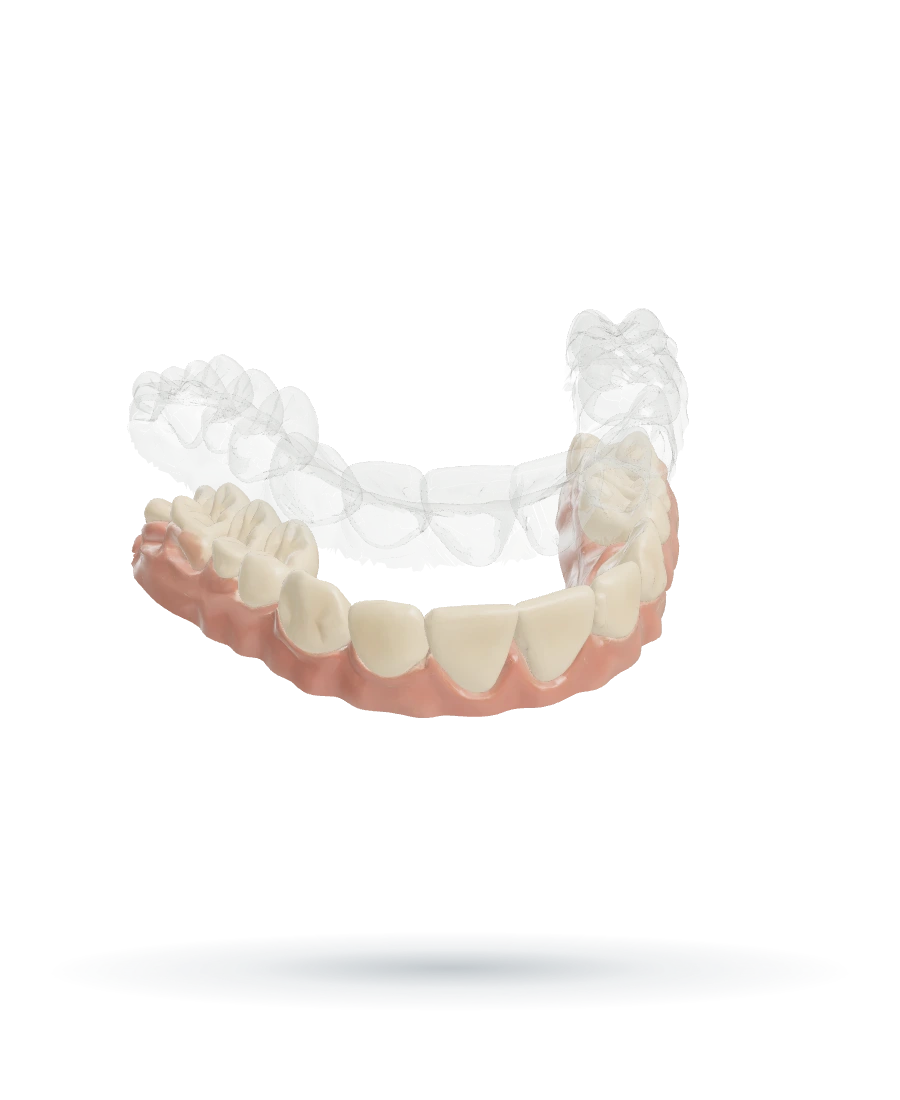
What it is
Clear aligner treatment, of which Invisalign is the best-known system, uses a series of custom-made plastic trays. Each tray is shaped slightly differently from the one before it and applies gentle pressure to particular teeth. You wear a tray for a set period, usually one to two weeks, then move on to the next. Over the series, teeth shift step by step toward the planned position.
Aligners can be used for crowded or crooked teeth, gaps and some bite problems. They are taken out for meals and for brushing and flossing. That convenience comes with a condition. Aligners only work while they are in your mouth, so they need to be worn for most of the day and night, as directed.
Not every case suits aligners. Large tooth movements and more complex bite problems may be better treated with fixed braces, sometimes by an orthodontist. Dr. Askari will tell you plainly if that applies to you. Whatever the method, teeth tend to drift after straightening, so retainers are part of the plan from the start.
Potential benefits
Hard to notice
The trays are made of thin, clear plastic, so they are much less visible than metal brackets and wires.
Removable for meals
You take the aligners out to eat, so there are no food restrictions of the kind that come with fixed braces.
Normal brushing and flossing
With the trays out, you can clean every tooth surface as usual. This can make it easier to keep teeth and gums healthy during treatment.
Smooth against the mouth
Aligners have no brackets or wire ends, so there is usually less rubbing on the lips and cheeks. Some pressure with each new tray is normal.
Who may be a candidate
Aligners can suit people with mild to moderate alignment problems who will wear them consistently. An examination of your teeth, gums and bite is needed to confirm they are an option for you.
- You have crowded, crooked or overlapping teeth.
- You have gaps between teeth that you would like closed.
- You have a mild bite problem that aligners can reasonably address.
- Your teeth and gums are healthy, or any decay or gum disease has been treated first.
- You are prepared to wear the trays as directed every day, and to wear retainers afterward.
What treatment typically involves
Treatment length varies with how far teeth need to move, and your estimate is given at the consultation.
Consultation and examination
We examine your teeth, gums and bite and talk about what you would like to change. Other options, including braces, are discussed where relevant.
Records and planning
Photos, X-rays and an impression or scan of your teeth are taken. These are used to plan each stage of movement and to make your trays.
Fitting your first trays
Your first aligners are checked for fit and you are shown how to insert, remove and clean them. Small tooth-colored attachments may be bonded to some teeth for grip.
Wearing and changing trays
You wear each tray for most of the day and night, removing it to eat, drink anything but water, and clean your teeth. You change trays on the schedule you are given.
Progress visits
Regular checks confirm that your teeth are tracking as planned. If they are not, the plan may be adjusted or additional trays ordered.
Retainers after treatment
When movement is complete, any attachments are removed and retainers are made. Wearing them as directed helps keep teeth from drifting back.
Recovery and aftercare
Aligner treatment depends on what you do between visits, both during treatment and once your teeth have moved.
- Wear your aligners for the hours you are given, taking them out only to eat, drink anything but water, and clean your teeth.
- Pressure or tenderness is common for the first few days of each new tray. Pain relief as advised by your dentist can help if you need it.
- Clean your teeth before the trays go back in, and rinse and gently brush the trays themselves. Avoid hot water, which can distort the plastic.
- Keep the trays in their case whenever they are out of your mouth. Tell us promptly if one is lost, cracked or no longer fits.
- Once treatment ends, wear your retainers exactly as directed. Teeth tend to drift back without them, and wear is often reduced to nights over time.
- Bring your retainers to checkups so their fit can be checked, and tell us if one becomes worn, cracked or loose.
What affects the cost
We do not publish a price for invisalign and clear aligners, because an honest figure depends on your own mouth. These are the things it depends on.
- How far your teeth need to move and how complex your bite is.
- How long treatment is expected to take and how many trays are needed.
- Whether extra trays are needed near the end to refine the result.
- The retainers you need afterward.
- What your dental insurance covers for orthodontic treatment, if anything.
Questions to bring to your consultation
- Are aligners suitable for my teeth and bite, or would braces work better?
- How long is my treatment likely to take?
- How many hours a day will I need to wear the trays?
- Will I need attachments, or any reshaping between teeth?
- What kind of retainer will I need afterward, and for how long?
- What does the cost include, and are retainers and extra trays part of it?
Common questions
How many hours a day do I need to wear aligners?
Most aligner plans call for wear of about 20 to 22 hours a day. In practice that means taking them out only to eat, drink anything other than water, and clean your teeth. Wearing them less tends to slow treatment or stop teeth from following the plan. You will be given the wear time for your own case.
Do clear aligners hurt?
Most people feel pressure or tenderness for the first few days of each new tray. This is a sign that teeth are moving and it usually eases quickly. The edge of a tray can occasionally rub the gum or tongue. Tell us if a tray feels sharp or if soreness does not settle, because it can usually be adjusted.
How long does aligner treatment take?
It depends on how far your teeth need to move. Minor corrections can take a few months. More involved cases often take a year or longer, and extra trays are sometimes needed near the end to refine the result. How consistently you wear the aligners also affects the timeline. You will be given an estimate at the consultation.
Can aligners fix every alignment problem?
No. Aligners handle many cases of crowding, spacing and mild bite problems well. Severely rotated teeth, large vertical movements and significant jaw or bite discrepancies can be harder to treat this way. Fixed braces, or referral to an orthodontist, may be recommended instead. An examination is the only way to know which applies to you.
Will I need to wear a retainer afterward?
Yes. Teeth naturally tend to move back toward where they started, whatever method was used to straighten them. A retainer holds them in their new position. Retainers are often worn more at first and then mainly at night. Many dentists advise continuing night wear for as long as you want your teeth to stay straight.
How do I look after my aligners?
Rinse them when you take them out and clean them gently with a soft toothbrush and cool water. Hot water can warp the plastic. Brush your teeth before putting them back in, so food and sugar are not held against the enamel. Keep them in their case when they are out, since trays are easily lost or thrown away.
Related care
- Cosmetic DentistryAn overview of the ways we can change the color, shape and alignment of your teeth, from whitening to veneers.
- Teeth WhiteningIn-office whitening that uses a peroxide gel to lighten the shade of natural teeth.
- Porcelain VeneersThin porcelain shells bonded to the front of teeth to change their color, shape or spacing.
- General DentistryExams, cleanings and preventive care that help find and treat dental problems while they are still small.
Further reading
All journal articles- Clear Aligners vs Braces for AdultsClear aligners or fixed braces as an adult? Compare how each works, daily life with both, which problems suit which, and why retainers matter afterward.
- Living With Clear Aligners: A Practical GuideA practical guide to clear aligners: wear time, eating and drinking, cleaning the trays, handling a lost tray, travel, and why retainers matter afterward.
- Porcelain Veneers: Cost and How Long They LastHow long porcelain veneers last, what wears them out and what helps, plus what the cost of veneers depends on and how to compare quotes fairly.
- How to Choose a Dentist in VenturaA checklist for choosing a dentist in Ventura: licensing, range of care, how options are explained, practical matters, emergencies and reviews.
- Porcelain Veneers: What to Know Before You DecidePorcelain veneers can change the color and shape of front teeth, but enamel is removed and the step is permanent. What to weigh before you decide.
- How Long Does Teeth Whitening Last?Teeth whitening is not permanent. Learn how long results commonly last, what makes them fade faster, how touch-ups work and what whitening cannot change.
Talk it through with a dentist.
Tell us what you would like to talk about and we will reply within one business day to arrange a time.