Crown Lengthening in Ventura, California
Making room to restore a tooth.
Crown lengthening exposes more of a tooth by reshaping the gum and, where needed, the bone beneath it. It is most often done so that a tooth broken or decayed near the gumline can be repaired with a crown or filling. Your dentist will explain whether your tooth needs it.
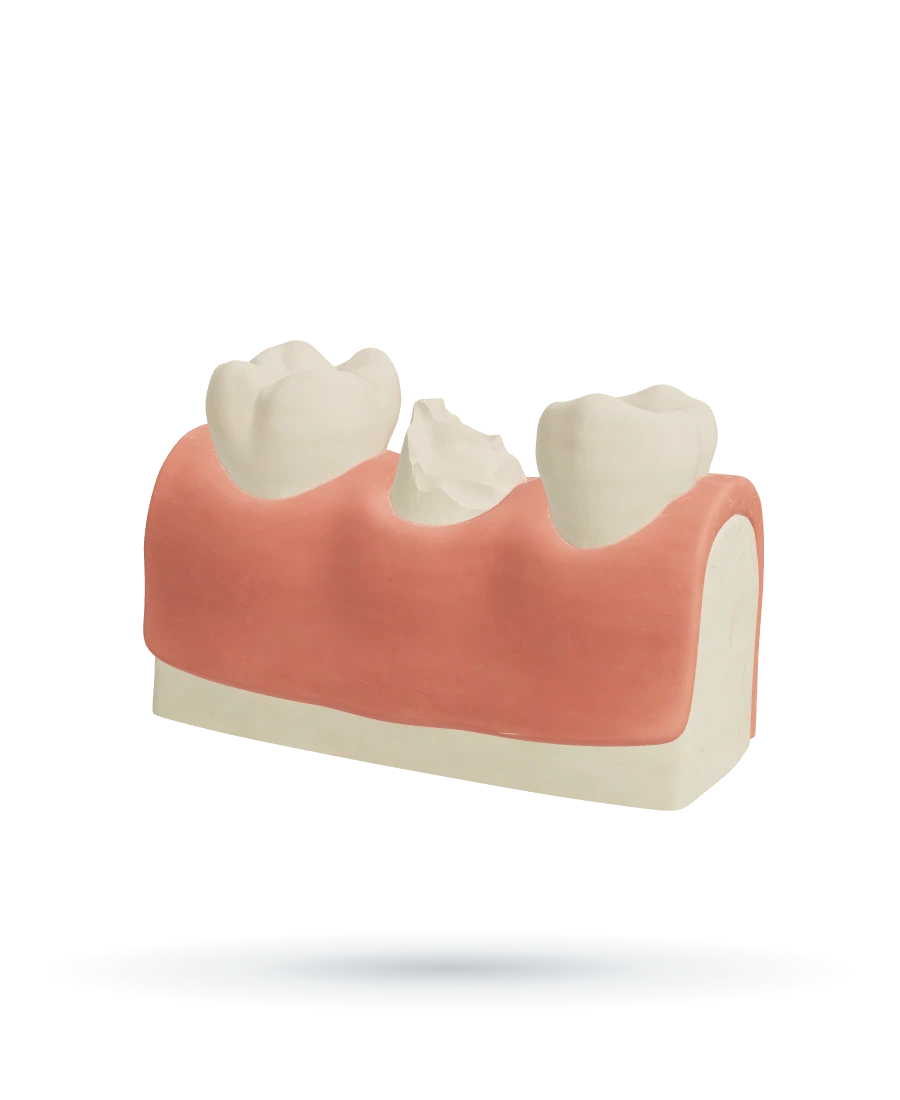
What it is
A crown or filling needs enough sound tooth above the gum to hold on to. When a tooth breaks or decays at or below the gumline, there may not be enough. Placing the edge of the crown deep under the gum is not a good answer either: the gum and bone need a small band of tooth surface to attach to, and a crown edge in that space can keep the gum inflamed.
Crown lengthening moves the edge of the gum, and where needed the bone, a little further along the root. The gum is gently folded back, a small amount of bone is removed and smoothed around the tooth, and the gum is stitched in place at its new level. Where the bone already sits far enough from the damaged edge, reshaping the gum alone may be enough. Once the area has healed, the tooth can be restored.
Crown lengthening is sometimes done for appearance too, when teeth look short because gum and bone cover more of them than usual. It differs from gum contouring, a cosmetic procedure that reshapes the gumline only and leaves the bone as it is. Your dentist will explain which of the two, if either, suits your teeth.
Potential benefits
Can make a repair possible
Exposing more sound tooth can give a crown or filling enough to hold on to, which may allow a tooth to be restored instead of removed.
Room for the gum to attach
Placing the edge of a restoration clear of the space the gum attaches to may help the gum around it stay healthier.
Easier to keep clean
A crown edge that sits at or just under the gum, rather than deep below it, is easier for you and your dental team to clean.
A more even gumline
Where short-looking teeth are the concern, reshaping the gum and bone may let the teeth show more evenly when you smile.
Who may be a candidate
Crown lengthening is usually considered when a tooth needs a crown or filling but too little of it shows above the gum. Your dentist will confirm this with an examination and X-rays.
- A tooth has broken off at or below the gumline.
- Decay, or the edge of an old filling or crown, extends below the gum.
- A tooth is too short for a new crown to stay in place securely.
- Your teeth look short because gum and bone cover more of them than usual, and reshaping the gum alone would not be enough.
- The root is long enough to keep the tooth well supported after some bone is reshaped. If it is not, other options may be discussed.
- Tell us if you smoke, have diabetes, or take blood thinners or other regular medications, because these can affect surgery and healing.
What treatment typically involves
When crown lengthening is done to prepare for a crown, the two are planned together. The steps below are typical, and your own plan is explained beforehand.
Examination and planning
Your dentist examines the tooth and gum and reviews X-rays to see how far the damage extends and where the bone sits. The procedure and the crown or filling that follows are planned together.
Numbing the area
Local anesthetic is used to numb the tooth and the gum around it before the procedure begins.
Reshaping the gum and bone
The gum is gently folded back from the tooth. Where needed, a small amount of bone is removed and smoothed so that more of the tooth stands clear of it.
Closing the gum
The gum is placed back at its new level and held with stitches. If the tooth needs a temporary crown, one may be placed or refitted. You are given instructions for the first days at home.
Healing
The stitches are removed or dissolve as the gum heals. The gum then needs time to settle at its new level before the tooth is restored.
Restoring the tooth
Once the gum has settled, the tooth is prepared and the final crown or filling is placed, with its edge where the gum can stay healthy around it.
Recovery and aftercare
You will be given instructions for the first days at home. These general points add to them and do not replace them.
- Rest for the remainder of the day. Some swelling and soreness are common for a few days, and a cold pack and pain relief as advised by your dentist can help.
- Eat soft foods and chew away from the treated area until you are told it is safe to do otherwise.
- Clean the treated area only as directed, which may mean not brushing there for a time, and keep the rest of your mouth clean as usual.
- Do not smoke while you heal, as smoking can slow healing of the gum and bone.
- The tooth may be sensitive to cold as the gum settles at its new level. Mention it at your follow-up visit if it does not ease.
- Call the office if bleeding, swelling or pain gets worse instead of better, if a temporary crown comes loose, or if you develop a fever.
What affects the cost
We do not publish a price for crown lengthening, because an honest figure depends on your own mouth. These are the things it depends on.
- How many teeth are treated.
- Whether bone needs reshaping or the gum alone is adjusted.
- Whether a temporary crown is needed while the gum heals.
- The crown or filling that follows, and any treatment the tooth needs first, such as a root canal.
- What your dental insurance covers.
Questions to bring to your consultation
- Why does this tooth need crown lengthening before it can be restored?
- Will bone be reshaped, or only gum?
- Is the root long enough to keep the tooth well supported afterward?
- How long should the gum heal before the crown or filling is placed?
- How might this tooth and the teeth beside it look afterward?
- What will the procedure and the crown cost, and what might my insurance cover?
Common questions
What is the difference between crown lengthening and gum contouring?
Gum contouring reshapes the gumline only and is usually done for appearance. Crown lengthening can also reshape the bone under the gum, and it is most often done so that a damaged tooth can be restored. If the bone sits too close to where the new gumline would be, reshaping the gum alone may not hold, because the gum tends to grow back toward the bone. Your dentist will explain which applies to you.
Why can the crown not simply go further under the gum?
The gum and bone need a small band of tooth surface between them to attach to. A crown edge placed in that space can keep the gum inflamed, make the area hard to clean and lead to bone loss around the tooth. Crown lengthening makes room for the edge of the crown without crowding that attachment.
Does crown lengthening hurt?
The area is numbed with local anesthetic, so most people feel pressure rather than pain during the procedure. Soreness and some swelling are common for a few days afterward and are usually managed with pain relief as your dentist advises. If you feel nervous about treatment, tell us. The office has nitrous oxide, oral sedation and IV sedation, and your dentist can tell you whether any of them may suit you.
Will my tooth look longer afterward?
It may. Because the gum sits further along the root afterward, the tooth can look longer than its neighbors, and small spaces can appear near the gum between teeth. On a back tooth this is usually less noticeable. For a front tooth, ask your dentist how it is likely to look, and whether neighboring teeth should be included so the gumline stays even.
How soon can the crown be placed?
The gum needs time to settle at its new level before the final crown is made, so that the crown edge can be placed accurately. For teeth that show when you smile, a longer wait is often advised. Your dentist will tell you when the tooth is ready. A temporary crown can protect the tooth in the meantime where one is needed.
Is there an alternative to crown lengthening?
Sometimes. Depending on the tooth, options may include moving the tooth further out of the gum with orthodontic treatment before restoring it or, where a tooth cannot be restored well, removing it and replacing it, for example with a dental implant. Your dentist will explain the options for your tooth before you decide.
Related care
- Dental CrownsA custom cap that covers a damaged or weakened tooth to restore its shape and strength.
- Gum ContouringA procedure that reshapes an uneven or gummy gum line, changing how much of each tooth shows when you smile.
- Dental FillingsA repair that replaces decayed tooth structure with a durable material, most often tooth-colored composite.
- Osseous SurgerySurgery that reduces deep gum pockets and reshapes damaged bone so advanced gum disease is easier to control.
Further reading
All journal articles- Cracked Tooth: Signs and Treatment OptionsPain when you bite or release can mean a cracked tooth. Learn the signs, the types of crack, how each is treated and what to do until you are seen.
- Crown or Filling: What Decides It?Crown or filling? It depends on how much healthy tooth is left. See what dentists consider, when each is used, the trade-offs and the questions to ask.
- Veneers, Bonding or Crowns: Which Fits?Bonding, porcelain veneers and crowns all change how a tooth looks, but they suit different problems. Compare what each involves and when it fits.
- What Happens During a Root CanalA step-by-step look at root canal treatment: why a tooth needs it, what happens in the chair, how it feels, recovery and why a crown often follows.
- When Do You Need a Dental Crown?A crown is recommended when a tooth is too weak or damaged for a filling. Learn the common reasons, the signs, the alternatives and what treatment involves.
- How Implants and Crowns Can Support Full Mouth ReconstructionFull mouth reconstruction combines several restorative procedures into one coordinated plan. Dental implants replace missing teeth, and crowns protect weakened ones. Together they rebuild chewing function, bite balance, and appearance in a steady sequence.
Talk it through with a dentist.
Tell us what you would like to talk about and we will reply within one business day to arrange a time.