Wisdom Tooth Removal in Ventura, California
Removing wisdom teeth when there is a reason to.
Wisdom teeth are the last molars to come in, and many mouths do not have room for them. Some cause problems and may be better removed, while others can be left and watched. Your dentist will examine your wisdom teeth, review X-rays and explain the options for you.
What it is
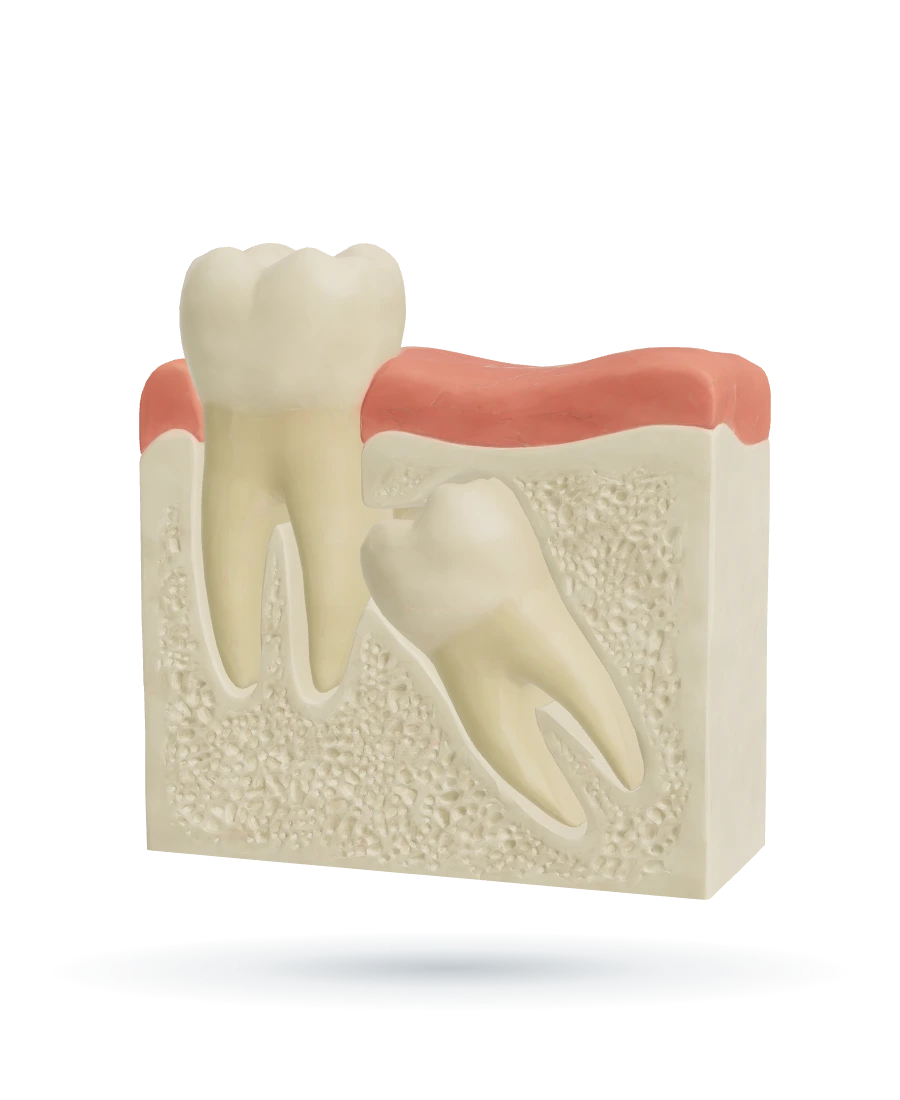
Wisdom teeth are the third molars at the very back of the mouth. They often come in during the late teens or early twenties, if they come in at all. When there is not enough room, a wisdom tooth may be impacted: stuck partly or fully under the gum or bone, or tilted against the tooth in front of it.
An impacted or partly erupted wisdom tooth can trap food and bacteria. The gum over it can become swollen and infected, and decay can develop in the wisdom tooth or the molar next to it. Less often, a cyst forms around a tooth that has not come through. Wisdom teeth that have come in fully, are healthy and can be cleaned well may not need to come out, and can be checked at regular visits.
Removing a wisdom tooth is an extraction. Some come out in a simple extraction. Others need a surgical extraction, with a small opening in the gum and sometimes removal of a little bone or of the tooth in sections. Not every case is the same: after an exam and X-rays, your dentist will explain the options for your teeth, which can include referral to an oral surgeon for some teeth.
Potential benefits
Relief from a problem tooth
Removing a wisdom tooth that keeps getting infected or has decayed often relieves the soreness it was causing once the area has healed.
Protects the neighboring molar
Taking out a tooth that presses against the molar in front, or traps food beside it, can help protect that tooth from decay and damage.
Removes a source of infection
Removing a tooth that repeatedly lets bacteria collect under the gum can help keep infection from returning in that area.
Easier to keep clean
Without a hard-to-reach tooth at the very back, the remaining molars are often easier to brush and clean between.
Who may be a candidate
Wisdom tooth removal is recommended only after an exam and X-rays, and only where there is a reason for it. These are common ones.
- The gum around a partly erupted wisdom tooth is repeatedly sore, swollen or infected.
- A wisdom tooth has decay, or is trapping food against the molar in front of it.
- X-rays show an impacted wisdom tooth that is affecting the neighboring tooth, the bone or the gum.
- A cyst or another change has been found around a wisdom tooth.
- A wisdom tooth cannot be cleaned well and keeps causing problems.
- Tell us about blood thinners, osteoporosis medications, heart conditions and diabetes. They can change how removal is planned.
What treatment typically involves
These steps describe a typical removal. Your dentist will tell you what applies to your own teeth.
Exam and X-rays
We examine your wisdom teeth and the teeth beside them, and take X-rays to see the position of each tooth, its roots and nearby structures such as the nerve in the lower jaw.
Planning together
Your dentist explains whether removal is advised, whether it would be simple or surgical, the risks that apply to you, and the options, which can include referral to an oral surgeon for some teeth. You also talk through comfort options.
Numbing and comfort
The area is numbed with local anesthetic, and any comfort option you have agreed on is given. If you have oral or IV sedation, you will need someone to take you home.
Removing the tooth
The tooth is loosened and removed. For an impacted tooth, a small opening is made in the gum first. You can expect to feel pressure and movement, but you should not feel sharp pain.
Protecting the socket
The site is cleaned, and stitches may be placed. You bite on gauze so that a blood clot can form in the socket.
Healing and follow-up
You go home with aftercare instructions. Healing is checked at a follow-up visit where needed.
Recovery and aftercare
Follow the instructions you are given on the day. These general points cover the first days of healing.
- Keep gentle, firm pressure on the gauze for as long as you are told. Some oozing for the rest of the day is common.
- Rest for the remainder of the day and avoid strenuous exercise for the first day or two, as advised. If you had oral or IV sedation, follow the instructions you were given for the rest of the day.
- For the first few days, do not smoke or use a straw, and avoid spitting forcefully. This helps keep the blood clot in place and can lower the chance of a dry socket.
- Choose soft, lukewarm foods and chew away from the area. Return to your usual diet gradually as it feels more comfortable.
- Swelling and jaw stiffness often peak after a day or two. A cold pack on the cheek, used as directed, and pain relief as advised by your dentist can help.
- Keep brushing your other teeth, taking care near the socket. Your dentist will tell you when and how to start rinsing the area gently.
What affects the cost
We do not publish a price for wisdom tooth removal, because an honest figure depends on your own mouth. These are the things it depends on.
- How many wisdom teeth are removed.
- Whether each removal is simple or surgical, which depends on how the tooth sits.
- Whether nitrous oxide or sedation is used.
- Whether an exam or X-rays are needed first.
- What your dental insurance covers.
Questions to bring to your consultation
- Do my wisdom teeth need to come out now, or can they be watched?
- Are any of them impacted, and would removal be simple or surgical?
- Are the roots close to a nerve or the sinus, and what would that mean for me?
- Would you remove them here, or refer me to an oral surgeon?
- Which comfort options would suit me, and what do I need to arrange for the day?
- What will this cost, and what might my insurance cover?
Common questions
Do all wisdom teeth need to be removed?
No. Wisdom teeth that have come in fully, sit in a good position, are healthy and can be cleaned well may be left in place. They are then checked at regular visits, with X-rays where needed. Removal is usually recommended when a wisdom tooth is causing problems or is likely to, and your dentist will explain the reasons in your case.
Will my wisdom teeth be removed at your office?
That depends on your teeth. After the exam and X-rays, your dentist will explain the options, which can include referral to an oral surgeon for some teeth. You are welcome to ask about this at your consultation.
What comfort options are there?
The area is numbed with local anesthetic, so most people feel pressure rather than pain. Our office also has nitrous oxide, oral sedation and IV sedation. Whether one of these suits you depends on your health and the treatment, and your dentist will talk the options through with you before anything is decided.
How long does it take to recover?
It varies with the tooth and how it was removed. Many people feel noticeably better within a few days, and the surgical removal of an impacted tooth often involves more swelling and a slower start. The gum typically closes over the following weeks, and the bone underneath takes longer. Your dentist will tell you what to expect in your case.
What is a dry socket?
A dry socket happens when the blood clot in the socket is lost or does not form, leaving the bone exposed. It can cause throbbing pain that starts a few days after the removal, when the area should be getting better, and the pain may spread toward the ear. It is more common after lower wisdom teeth are removed and in people who smoke. It is treatable, so call the office if you think you have one.
When should I call the office after wisdom tooth removal?
Call if bleeding does not slow with firm pressure on gauze, if pain or swelling gets worse after the first two or three days, if you develop a fever or notice a bad taste or smell, or if numbness has not worn off by the next day. If you have trouble breathing or swallowing, or swelling spreading toward the eye or neck, call 911 or go to an emergency room.
Related care
- Tooth ExtractionsCareful removal of a tooth that cannot be saved, with a plan for healing and for replacing it.
- General DentistryExams, cleanings and preventive care that help find and treat dental problems while they are still small.
- Family DentistryCheckups, cleanings and treatment for children, teens, adults and older adults, in one office.
Further reading
All journal articles- Tooth Extraction Recovery: What to ExpectGeneral aftercare for a tooth extraction: protecting the blood clot, what to avoid, what is normal, the signs of dry socket or infection and when to call.
- Toothache: What to Do and When to CallWhat to do for a toothache at home, what not to do, the signs that mean same-day care or the emergency room, and how dentists treat the common causes.
- How to Choose a Dentist in VenturaA checklist for choosing a dentist in Ventura: licensing, range of care, how options are explained, practical matters, emergencies and reviews.
- Early Signs of Gum DiseaseBleeding, red or puffy gums and lasting bad breath can be early signs of gum disease. Learn what to look for, who is at risk and when to see a dentist.
- What Happens at a Dental Exam and CleaningA step-by-step look at a routine dental exam and cleaning: health history, the examination, X-rays, the cleaning itself and the questions worth asking.
- Deep Cleaning vs Regular CleaningA regular cleaning maintains healthy gums. A deep cleaning treats gum disease below the gumline. See how they differ and how a dentist decides between them.
Talk it through with a dentist.
Tell us what you would like to talk about and we will reply within one business day to arrange a time.