Gum Contouring in Ventura, California
Evening out the frame around your teeth.
Gum contouring reshapes the gum line, usually around the upper front teeth, to even out gums that sit unevenly or cover more of the teeth than you would like. At our Ventura office, your dentist examines your gums, teeth and bone first and explains whether contouring suits you.
What it is
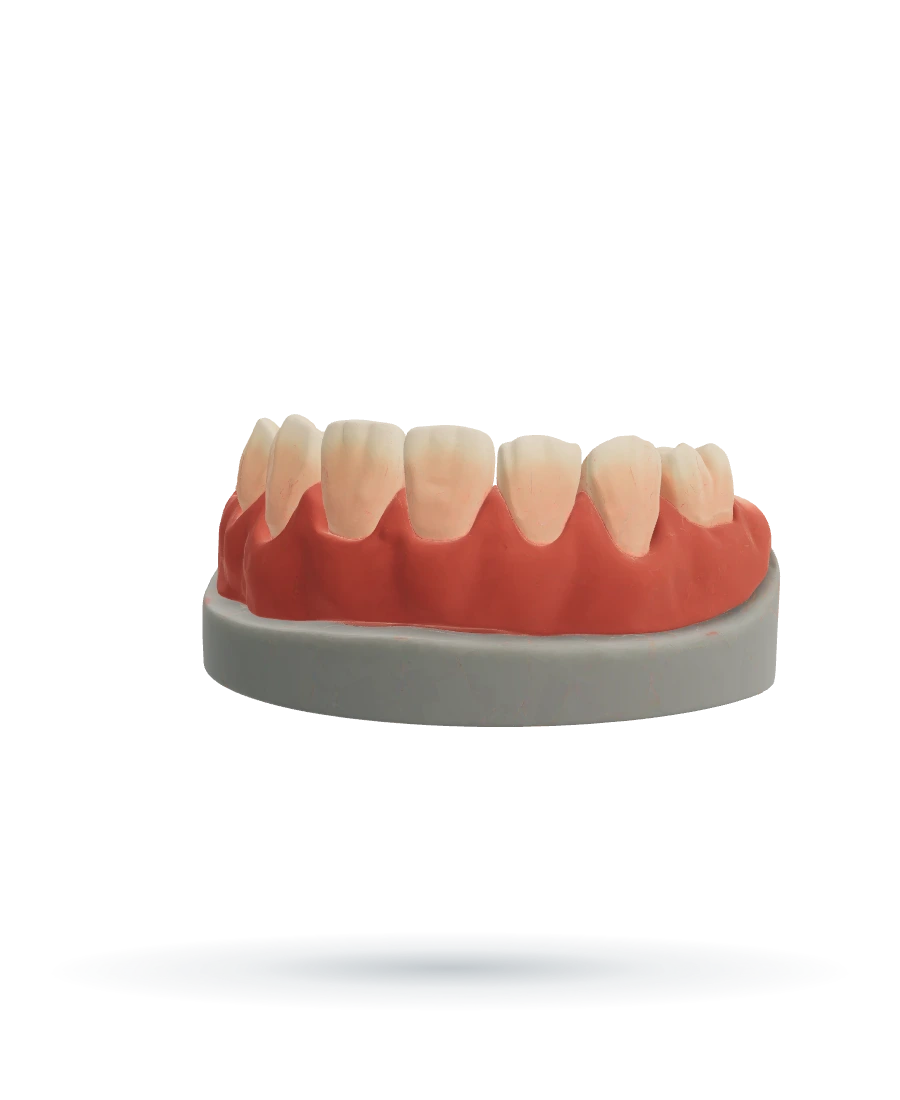
The gums frame your teeth. When the gum line sits higher on some teeth than on others, or covers more of the teeth than usual, teeth can look short or uneven. This is often called a gummy smile. Gum contouring, also called gingival contouring or gum reshaping, removes or reshapes a small amount of gum tissue so that the gum line is more even.
A gummy smile can have more than one cause. Extra gum tissue may cover part of a tooth, the teeth may be small or worn, the upper lip may lift high when you smile, or the upper jaw may show more gum because of the way it grew. Contouring helps when extra gum tissue is the reason. Where the lip or jaw is the cause, your dentist will explain the other options.
Gum contouring is not the same as crown lengthening, which has its own page. Contouring reshapes the gum alone, mainly for appearance. Crown lengthening exposes more of a tooth, often so it can hold a crown or filling, and may involve reshaping the bone under the gum. Contouring may be done with a dental laser or with other instruments, and your dentist will explain the approach suited to you.
Potential benefits
A more even gum line
Reshaping the gum can bring the gum edges across your front teeth into better balance with each other.
More of each tooth can show
Where extra gum covers part of the teeth, removing it can let them look longer and better proportioned.
The teeth are left as they are
Contouring changes the gum rather than the teeth, so no enamel is removed as part of it.
Part of a wider plan
It can be done on its own, or before bonding, veneers or crowns, so that new work can be shaped to the new gum line.
Who may be a candidate
Gum contouring can suit people whose gum line is uneven, or covers more tooth than usual, because of extra gum tissue. An examination, which may include X-rays, is needed to find the cause.
- More gum shows than you would like when you smile.
- Your gum line is higher on some teeth than on others.
- Your front teeth look short because gum covers part of them.
- You are planning bonding, veneers or crowns and the gum line needs evening out first.
- Your gums are free of untreated gum disease. Swollen or inflamed gums are treated first, because they can change shape once they are healthy.
- If the cause is the lip, the jaw or the level of the bone, other treatment may be needed instead. Your dentist will explain.
What treatment typically involves
Gum contouring is usually done in one visit, although the gums take longer to heal.
Examination and cause
Your dentist examines your gums and smile, measures the gum around each tooth and may take X-rays to see where the bone sits. This shows whether extra gum is the cause.
Planning the gum line
The new gum line is planned with you, often with the help of photographs, so you know which teeth will change and roughly how.
Numbing the area
A local anesthetic is used to numb the gums being treated, so most people feel pressure rather than sharp pain.
Reshaping the gum
The extra gum tissue is removed and its edge is shaped. This may be done with a dental laser or with other instruments, depending on your case.
Healing and review
You are given instructions for the days that follow, and a review visit may be arranged. If bonding, veneers or crowns are planned, they are usually placed once the gum line has settled.
Recovery and aftercare
Healing after gum contouring is usually straightforward. You will be given instructions for your own case, and these general points apply.
- Tenderness and slight bleeding in the first days are common. Pain relief as your dentist advises can help.
- Choose soft, cool or lukewarm foods for the first few days, and avoid spicy, crunchy or very hot foods that can irritate the gums.
- Brush gently around the treated area with a soft toothbrush, and follow any rinsing instructions you are given.
- Avoid smoking while the gums heal, as it can slow healing.
- Call the office if bleeding does not stop with gentle pressure, if swelling increases after the first few days, or if you develop a fever.
- Keep your review visit and regular cleanings, so the new gum line can be checked as it settles.
What affects the cost
We do not publish a price for gum contouring, because an honest figure depends on your own mouth. These are the things it depends on.
- How many teeth are treated.
- How much gum tissue needs to be reshaped.
- Whether gum disease needs treating first, or some teeth need crown lengthening instead.
- Whether the contouring is part of a wider plan with bonding, veneers or crowns.
- What your dental insurance covers.
Questions to bring to your consultation
- What is causing my gummy or uneven smile, and is extra gum tissue the reason?
- Is gum contouring enough, or would I need crown lengthening or another treatment?
- Which teeth would be treated, and how would my gum line change?
- How would the contouring be done in my case, and what should I expect while it heals?
- Could the gum grow back, and what would happen then?
- What will this cost, and might my insurance cover any of it?
Common questions
What is the difference between gum contouring and crown lengthening?
Both change the gum line, for different reasons. Gum contouring reshapes the gum alone, mainly to change how the smile looks. Crown lengthening exposes more of the tooth, often so a crown or filling can be placed on sound tooth structure, and may involve reshaping the bone under the gum. It is also used for appearance when the bone sits too close to the gum edge for contouring alone. Your dentist will explain which applies to you.
Does gum contouring hurt?
The gums are numbed with local anesthetic first, so most people feel little during the procedure. Tenderness for a few days afterward is common and usually settles. If you feel anxious about dental treatment, tell us. The office has nitrous oxide, oral sedation and IV sedation, and your dentist can tell you whether any of them may suit you.
Can the gums grow back after contouring?
Gum tissue can sometimes creep back toward where it was, especially when the bone sits close to the gum edge. This is one reason the gum and bone are measured before treatment, and why crown lengthening is sometimes recommended instead. Your dentist will tell you how likely this is in your case.
Is gum contouring done with a laser?
It may be done with a dental laser or with other instruments. The choice depends on your gums and the amount of tissue involved. Ask which method would be used for you and what it means for healing.
How long does healing take?
The gums are usually tender for a few days, and many people return to their usual routine soon after. The gum line can continue to settle for several weeks. If veneers, bonding or crowns are planned afterward, your dentist will usually wait until the gums have healed before they are matched.
Can contouring fix a gummy smile caused by my lip or jaw?
Not on its own. When the upper lip lifts high, or the upper jaw shows more gum because of the way it grew, removing gum tissue does not address the cause. Other treatments exist for these situations, some outside general dentistry. Your dentist can explain the options and whether a referral would help.
Related care
- Crown LengtheningA gum procedure that exposes more of a tooth, most often so a crown or filling can be placed on it.
- Cosmetic DentistryAn overview of the ways we can change the color, shape and alignment of your teeth, from whitening to veneers.
- Periodontal CareAn overview of how gum disease is found and treated, from deep cleaning to surgery, by a board-certified periodontist.
- Smile MakeoversA consultation-led plan that combines cosmetic treatments around your own teeth, gums and features.
Further reading
All journal articles- Porcelain Veneers: Cost and How Long They LastHow long porcelain veneers last, what wears them out and what helps, plus what the cost of veneers depends on and how to compare quotes fairly.
- How to Choose a Dentist in VenturaA checklist for choosing a dentist in Ventura: licensing, range of care, how options are explained, practical matters, emergencies and reviews.
- Porcelain Veneers: What to Know Before You DecidePorcelain veneers can change the color and shape of front teeth, but enamel is removed and the step is permanent. What to weigh before you decide.
- Clear Aligners vs Braces for AdultsClear aligners or fixed braces as an adult? Compare how each works, daily life with both, which problems suit which, and why retainers matter afterward.
- How Long Does Teeth Whitening Last?Teeth whitening is not permanent. Learn how long results commonly last, what makes them fade faster, how touch-ups work and what whitening cannot change.
- How to Prepare for a Cosmetic Dentistry ConsultationGet more from a cosmetic dentistry consultation: what to think about first, what to bring, what happens at the visit, and the questions worth asking.
Talk it through with a dentist.
Tell us what you would like to talk about and we will reply within one business day to arrange a time.