Retainers in Ventura, California
Holding teeth where they have been moved.
A retainer helps hold your teeth in their new positions after braces or clear aligners. Teeth tend to drift back over time, so retainers are part of most straightening plans. At our Ventura office, your dentist will explain which type suits you and how to wear it.
What it is
Once teeth have been moved, the gum and bone around them take time to adapt, and the teeth tend to move back toward where they started. Teeth also keep shifting slowly throughout life. A retainer holds them in place, which helps keep the result of your treatment.
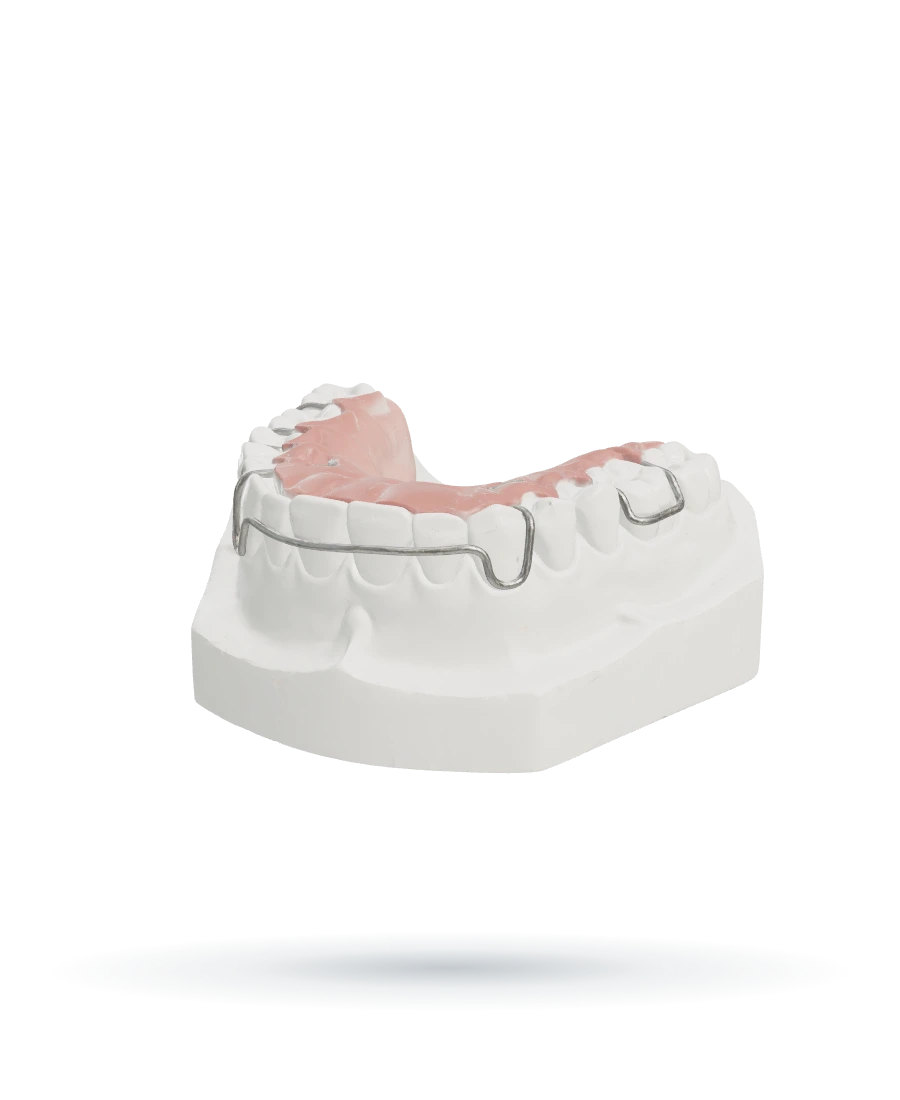
There are two broad kinds. Removable retainers are either clear plastic trays shaped to your teeth, much like an aligner, or wire retainers, with a wire across the front teeth held in an acrylic base. Bonded retainers, also called fixed retainers, are a thin wire attached to the back of the front teeth, where it is hard to see. Some people wear a bonded retainer and a removable one together.
Each type has trade-offs. Removable retainers are easy to clean around but work only while you wear them, and they can be lost or damaged. Bonded retainers work without needing to be remembered, but they make cleaning between the front teeth harder and can come loose. All retainers wear with use, so they are checked at your visits and replaced when they no longer fit.
Potential benefits
Helps keep teeth in place
Wearing a retainer as directed helps stop teeth from drifting back toward their old positions.
A choice of types
Removable and bonded retainers can be used alone or together, depending on your teeth and what you find easiest to keep up.
Hard to notice
Clear retainers are thin and see-through, and bonded retainers sit behind the teeth, so neither is very visible when you talk or smile.
Fit can be checked
Bringing your retainer to checkups lets its fit be checked, so a worn or damaged one can be replaced in good time.
Who may be a candidate
Most people who have had their teeth straightened are advised to wear a retainer. Your dentist will recommend a type and a wearing schedule after looking at your teeth and how they were moved.
- You are finishing treatment with clear aligners or braces.
- Your retainer is lost, cracked, worn or no longer fits.
- Your teeth have shifted slightly since you stopped wearing a retainer. If they have moved more, further straightening may be discussed first.
- A bonded retainer has come loose, broken or feels rough or sharp.
- You had your teeth straightened some time ago and would like your retainer checked.
What treatment typically involves
The steps vary with the type of retainer, and your dentist will explain how many visits yours needs.
Checking your teeth
Your teeth, gums and bite are examined. If you are finishing aligner treatment, any attachments are removed and the teeth are polished.
Impression or scan
An impression or scan of your teeth is taken, so that a removable retainer can be made to fit them closely.
Making or placing the retainer
A removable retainer is made to the shape of your teeth. A bonded retainer is placed by attaching a thin wire to the back of the front teeth with tooth-colored composite.
Fitting and instructions
The fit is checked and adjusted. You are shown how to put in, take out and clean a removable retainer, or how to clean around a bonded one, and given your wearing schedule.
Checking over time
Bring your retainer to checkups so its fit and condition can be checked. A worn or damaged retainer can be replaced, or in some cases repaired.
Recovery and aftercare
A new retainer can take a little getting used to. These points help in the first days and over time.
- A new retainer may feel tight or cause some pressure for the first few days. This usually eases. Tell us if it causes sore spots.
- Your speech may sound slightly different at first, and you may notice more saliva. Both usually settle as you get used to it.
- Unless your dentist tells you otherwise, take a removable retainer out to eat, and drink only water while it is in.
- Clean your teeth before a removable retainer goes back in, and keep it in its case whenever it is out of your mouth.
- With a bonded retainer, avoid biting directly into very hard foods with your front teeth, and clean carefully along the wire every day.
- Call us if a retainer is lost, cracked or no longer fits, or if a bonded wire feels loose, sharp or broken, since teeth can start to move without it.
What affects the cost
We do not publish a price for retainers, because an honest figure depends on your own mouth. These are the things it depends on.
- Whether you need a removable retainer, a bonded retainer or both.
- Whether retainers are needed for the upper teeth, the lower teeth or both.
- Whether it is a first retainer after treatment or a replacement.
- Whether a bonded retainer needs repairing or replacing.
- What your dental insurance covers.
Questions to bring to your consultation
- Which type of retainer do you recommend for me, and why?
- How many hours a day should I wear it at first, and later on?
- How long will I need to keep wearing a retainer?
- How do I clean my retainer, or clean around a bonded one?
- What should I do if my retainer is lost, broken or stops fitting?
- What does a retainer cost, and would my insurance cover a replacement?
Common questions
How long do I need to wear a retainer?
Teeth can shift at any age, so many dentists advise wearing a retainer for as long as you want your teeth to stay straight. Retainers are often worn more at first and then mainly at night. Your dentist will give you the schedule for your own case.
Is a removable or a bonded retainer better?
Neither suits everyone. Removable retainers are easy to clean around and can be taken out, but they only work while you wear them. Bonded retainers work without needing to be remembered, but they make flossing between the front teeth harder and can come loose without your noticing. Some people use both. Your dentist will explain which suits your teeth.
What happens if I stop wearing my retainer?
Teeth may start to drift back toward their old positions. The change can be slow and is not always noticed at first. If a removable retainer feels tight after a break, that can be a sign teeth have moved. Call the office rather than forcing it in, so the fit can be checked.
How do I clean a retainer?
Rinse a removable retainer when you take it out and brush it gently with a soft toothbrush and cool water. Hot water can warp the plastic. Keep it in its case when it is out of your mouth, away from heat and pets. For a bonded retainer, brush carefully along the wire and use a floss threader or other cleaning aid between the teeth, as your dental team shows you.
How often do retainers need replacing?
There is no fixed interval. Clear retainers can wear, crack or discolor with use, and wire retainers can bend or loosen. A bonded wire can come loose or break. Your retainer is checked at your regular visits, and a new one is made when it no longer fits well or has worn.
Can a retainer straighten teeth that have moved?
Not usually. A retainer is made to hold teeth, not to move them. If teeth have shifted only slightly, a retainer may still fit and hold them where they are. If they have moved more, a new retainer made to fit them as they are now, or further straightening, may be discussed.
Related care
- Invisalign and Clear AlignersA series of clear, removable trays that gradually move teeth into straighter positions.
- Mouth Guards and Night GuardsCustom sports mouth guards, and night guards that help protect teeth from clenching or grinding during sleep.
- Cosmetic DentistryAn overview of the ways we can change the color, shape and alignment of your teeth, from whitening to veneers.
- General DentistryExams, cleanings and preventive care that help find and treat dental problems while they are still small.
Further reading
All journal articles- Clear Aligners vs Braces for AdultsClear aligners or fixed braces as an adult? Compare how each works, daily life with both, which problems suit which, and why retainers matter afterward.
- Living With Clear Aligners: A Practical GuideA practical guide to clear aligners: wear time, eating and drinking, cleaning the trays, handling a lost tray, travel, and why retainers matter afterward.
- Porcelain Veneers: Cost and How Long They LastHow long porcelain veneers last, what wears them out and what helps, plus what the cost of veneers depends on and how to compare quotes fairly.
- How to Choose a Dentist in VenturaA checklist for choosing a dentist in Ventura: licensing, range of care, how options are explained, practical matters, emergencies and reviews.
- Porcelain Veneers: What to Know Before You DecidePorcelain veneers can change the color and shape of front teeth, but enamel is removed and the step is permanent. What to weigh before you decide.
- How Long Does Teeth Whitening Last?Teeth whitening is not permanent. Learn how long results commonly last, what makes them fade faster, how touch-ups work and what whitening cannot change.
Talk it through with a dentist.
Tell us what you would like to talk about and we will reply within one business day to arrange a time.