Gum Grafts in Ventura, California
Adding gum where it has pulled back.
A gum graft treats gum recession by adding tissue where the gum has pulled back from a tooth. It can thicken thin gum and cover some or all of an exposed root. Your dentist will look for the cause of the recession first and explain whether a graft suits it.
What it is
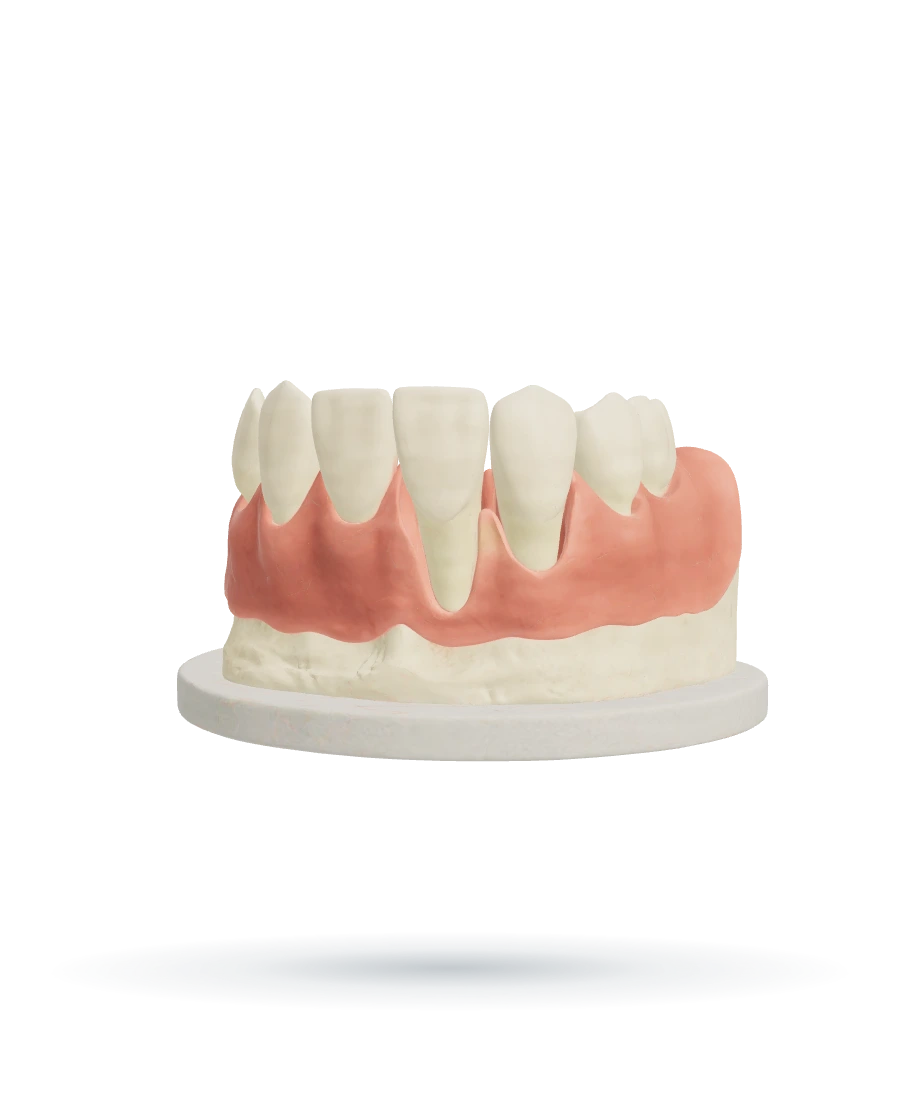
Gum recession means the gum has pulled back from a tooth and left part of the root exposed. The root has no enamel over it, so it can be sensitive to cold and touch, decays more easily than the crown of the tooth and can be worn into notches by brushing. Where recession comes from gum disease, some of the support around the tooth has been lost as well. Gum that has receded does not grow back on its own.
In a gum graft, tissue is placed over the exposed root or along thin gum and stitched so that it heals into place. In a connective tissue graft, a small piece of tissue is taken from just beneath the surface of the roof of the mouth, the palate, and placed under the gum around the tooth. In a free gingival graft, a thin layer is taken from the surface of the palate and placed where the gum needs to be thicker and firmer. Sometimes gum beside the tooth can be moved across to cover it instead.
In some cases a processed donor tissue or another graft material is used in place of tissue from your palate, which avoids a second area to heal. A graft does not treat the cause of recession, so gum disease or brushing that is too hard is dealt with first. Your dentist will explain which kind of graft is recommended and what is realistic for your teeth.
Potential benefits
Covers exposed roots
A graft can cover some or all of an exposed root, which may reduce sensitivity and protect the root surface from decay and wear.
Thicker, firmer gum
Adding tissue where the gum is thin may help it resist further recession and stand up better to brushing.
Helps slow recession
Where recession is getting worse, a graft may help slow it and protect the gum and bone around the root.
A more even gumline
Covering a root that shows when you smile can bring the tooth closer in length to the teeth beside it.
Who may be a candidate
A gum graft is considered when recession is progressing, causing problems or affecting how your smile looks. Not every case of recession needs one, and an examination with gum measurements and X-rays shows what kind you have.
- One or more roots are exposed and the recession is getting worse over time.
- An exposed root is sensitive, and a desensitizing toothpaste and other measures have not been enough.
- The gum around a tooth is very thin, or little firm gum is left at the base of the tooth.
- A receded gumline on a front tooth bothers you.
- Gum disease has been treated or ruled out, and you are able to keep the area clean while it heals and afterward.
- Tell us if you smoke, have diabetes, or take blood thinners or other regular medications, because these can affect surgery and healing.
What treatment typically involves
A graft is often done on one area of the mouth at a time. The steps below are typical, and your own plan is explained beforehand.
Examination and finding the cause
Your dentist measures the recession and the gum pockets, reviews X-rays and looks for the cause, such as gum disease, forceful brushing or the position of the tooth.
Treating the cause
Gum disease is treated first if it is present, and your brushing technique is checked. This gives the graft a healthier place to heal.
Choosing the graft
Your dentist explains which type of graft is recommended, whether tissue would come from your palate or a donor or other material would be used, and why.
Placing the graft
With the area numbed, the gum around the tooth is prepared, and the graft is positioned over the root or along the thin gum and held with fine stitches. If tissue is taken from the palate, that area is closed or covered too.
Healing and follow-up
Stitches are removed or dissolve as the gum heals. The graft is checked at follow-up visits as it blends in with the gum around it, which can take some months.
Long-term care
Gentle brushing, cleaning between your teeth and regular checkups help protect the graft. The gumline is measured at later visits so that any change can be tracked.
Recovery and aftercare
The graft needs to stay undisturbed while it heals into place. You will be given instructions for the first days at home. These general points add to them and do not replace them.
- Do not brush or floss the grafted area until you are told to, and do not pull your lip or cheek aside to look at it, as this can disturb the graft and the stitches.
- Eat soft, cool foods and chew on the other side. Avoid hard, crunchy, spicy or very hot foods until you are told otherwise.
- If tissue was taken from your palate, the roof of your mouth may feel as if it has been burned for some days, and it may ooze a little. If you were given a protective cover for the palate, wear it as directed.
- Swelling and soreness are common for several days. A cold pack used as directed and pain relief as advised by your dentist can help.
- Do not smoke while you heal, since smoking can slow healing and affect how well the graft takes.
- Keep your follow-up visits, and call the office if bleeding does not stop with gentle pressure, if swelling or pain gets worse instead of better, if you develop a fever or if the graft seems to have moved.
What affects the cost
We do not publish a price for gum grafts, because an honest figure depends on your own mouth. These are the things it depends on.
- How many teeth or areas need grafting.
- The type of graft, and whether tissue is taken from your palate or a donor or other material is used.
- Whether gum disease or other treatment is needed first.
- The follow-up visits needed while the graft heals.
- What your dental insurance covers.
Questions to bring to your consultation
- What is causing my recession, and does that need treating first?
- Which teeth would benefit from a graft, and which can simply be watched?
- Which type of graft do you recommend, and would tissue come from my palate?
- How much of the exposed root is it realistic to cover?
- What will healing be like at the graft and at the palate?
- What will this cost, and what might my insurance cover?
Common questions
Do I need a gum graft if my gums are receding?
Not always. Mild recession that is stable and not causing problems can often be watched, with gentler brushing and regular measurements. A graft is generally considered when recession is getting worse, when sensitivity cannot be managed, when the gum is very thin or when appearance is a concern.
Does a gum graft hurt?
The area is numbed with local anesthetic, so most people feel pressure rather than pain during the procedure. Afterward the graft and, if tissue was taken from it, the palate are usually sore for several days. Pain relief as your dentist advises can help. If you feel nervous about treatment, tell us. The office has nitrous oxide, oral sedation and IV sedation, and your dentist can tell you whether any of them may suit you.
Where does the graft tissue come from?
Often from the palate, the roof of your mouth, either from just beneath its surface or from a thin surface layer. Sometimes gum beside the tooth can be moved across instead. In some cases a processed donor tissue or another graft material is used, which avoids taking tissue from your palate. Donor materials are treated and sterilized before use. Your dentist will explain what is recommended for you and why.
Will a graft cover my whole root?
Not always. How much of a root can be covered depends on the type of recession. Where the bone and gum between the teeth are still intact, more of the root can often be covered. Where they have been lost, coverage may be partial, although the graft can still thicken the gum. Your dentist can tell you what is realistic for your teeth before you decide.
How long does recovery take?
Many people return to routine activities within a day or two, but this varies. The graft and the palate are usually tender for several days, and the gum continues to heal and settle for some weeks after that. You will be given instructions on eating, cleaning the area and follow-up visits.
Can recession come back after a graft?
It can. A graft does not remove whatever caused the recession, so gentle brushing, keeping gum disease under control and regular checkups all matter afterward. Your dentist will measure the area at later visits, so that any change can be noticed early.
Related care
- Periodontal CareAn overview of how gum disease is found and treated, from deep cleaning to surgery, by a board-certified periodontist.
- Scaling and Root PlaningA non-surgical deep cleaning that removes plaque and tartar from below the gumline to treat gum disease.
- Osseous SurgerySurgery that reduces deep gum pockets and reshapes damaged bone so advanced gum disease is easier to control.
- Guided Tissue RegenerationA gum surgery that uses a barrier membrane, often with graft material, to help regrow bone lost around a tooth.
Further reading
All journal articles- Early Signs of Gum DiseaseBleeding, red or puffy gums and lasting bad breath can be early signs of gum disease. Learn what to look for, who is at risk and when to see a dentist.
- Deep Cleaning vs Regular CleaningA regular cleaning maintains healthy gums. A deep cleaning treats gum disease below the gumline. See how they differ and how a dentist decides between them.
- Gum Health and the Rest of Your BodyResearchers have observed links between gum disease and conditions such as diabetes and heart disease. Here is what is known, what is not and what to do.
- Receding Gums: Causes and TreatmentReceding gums expose the tooth root and do not grow back. Learn the common causes, how to keep recession from getting worse and which treatments may help.
- What Does a Periodontist Do?A periodontist is a dentist with extra training in the gums and bone that support teeth. Learn what they treat, when you may be referred and what to expect.
- Why Do My Gums Bleed When I Brush?Gums usually bleed because plaque at the gumline has inflamed them. Learn the other causes, what to do at home and when bleeding needs a dental visit.
Talk it through with a dentist.
Tell us what you would like to talk about and we will reply within one business day to arrange a time.