Dental Sealants in Ventura, California
A thin shield for the grooves of back teeth.
A dental sealant is a thin coating painted onto the chewing surfaces of back teeth, where deep grooves can trap food and plaque. Sealants are often placed on children’s molars and can suit adults too. Your dentist will check each tooth and explain whether a sealant would help.
What it is
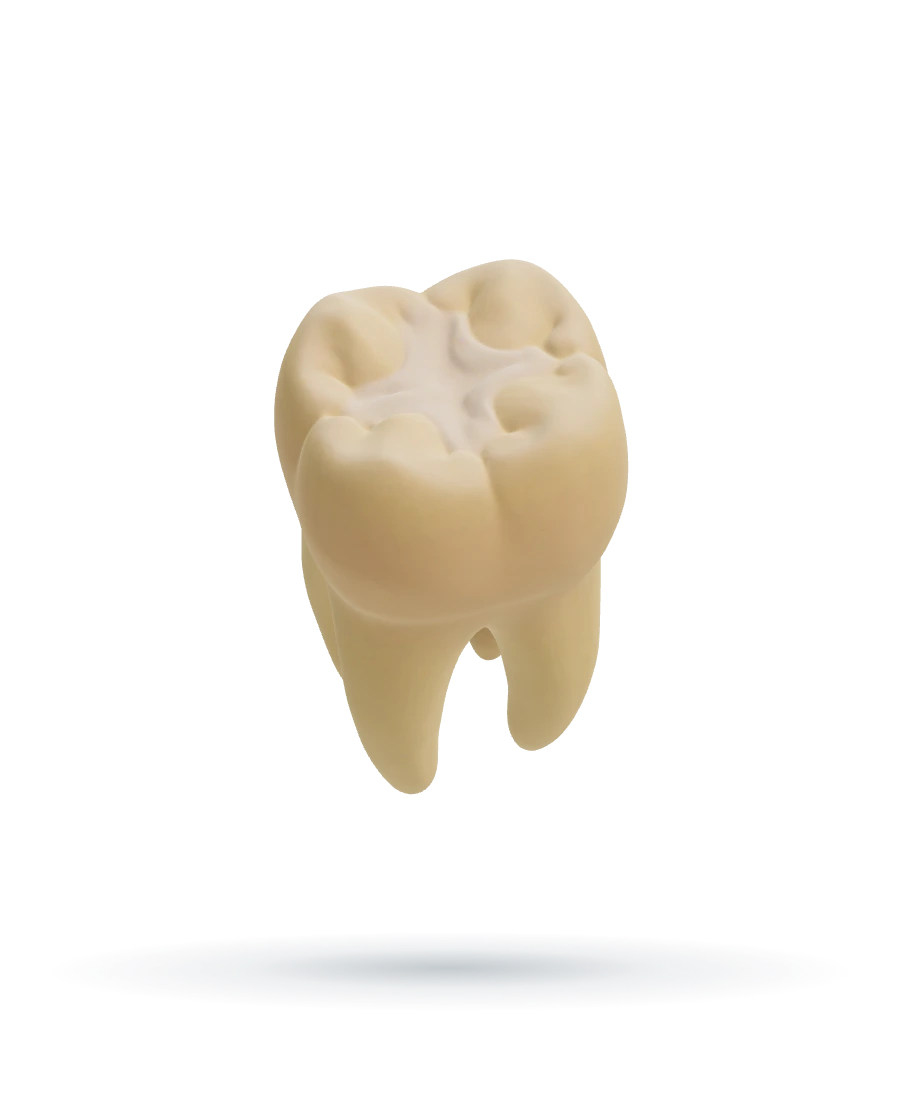
The chewing surfaces of molars and premolars have pits and grooves. Some are so narrow that toothbrush bristles cannot clean them well, so food and plaque collect there, and many cavities start in these spots. A sealant is a thin coating, usually a resin material, that flows into the grooves and hardens, sealing them over.
Sealants are most often placed on children’s back teeth soon after they come in, because newly erupted teeth are more prone to decay. The first adult molars often come in around age 6 and the second around age 12. Adults can have sealants too, where a back tooth has deep grooves and no decay or filling on its chewing surface.
Placing a sealant usually needs no drilling and no numbing. A sealant covers only the chewing surface, so it does not replace brushing, cleaning between the teeth or fluoride. Sealants can wear or chip with chewing, so they are checked at your regular visits and can be repaired or replaced when needed.
Potential benefits
Helps keep out food and plaque
Sealing the grooves can make it harder for food and bacteria to settle where a toothbrush misses, which may lower the chance of a cavity starting there.
Usually no drilling
A sealant is painted onto the clean surface of the tooth, so placing one usually needs no drilling and no numbing.
Protection while habits form
For children who are still learning to brush well, sealants can add protection to the teeth that are hardest to reach.
Easy to check and repair
Your dentist can look at sealants at each checkup and touch up or replace one that has worn or chipped.
Who may be a candidate
Sealants are considered tooth by tooth after an exam. These are common situations in which your dentist may suggest them.
- Your child’s first or second adult molars have recently come in.
- A back tooth has deep pits or grooves and no filling on its chewing surface.
- You or your child have had cavities before, or have a higher risk of decay.
- A groove shows a very early change that has not become a cavity, and your dentist judges a sealant suitable.
- An existing sealant has worn or chipped. A tooth that already has a cavity usually needs a filling instead.
What treatment typically involves
Sealants are usually placed in a single visit.
Checking the tooth
Your dentist examines the tooth, with X-rays where they are needed, to make sure there is no cavity that needs a filling instead.
Cleaning the surface
The chewing surface is cleaned so that the sealant can bond to the enamel.
Preparing the enamel
A gel is applied for a short time to help the sealant grip, then rinsed off. The tooth is kept dry, because moisture can stop the sealant from bonding.
Painting on the sealant
The sealant is painted into the pits and grooves and then hardened, usually with a curing light.
Checking the bite
Your dentist checks that the sealant has set and that your bite feels normal, and smooths any spot that feels high.
Checks at later visits
Sealants are looked at during regular checkups. One that has worn or chipped can be repaired or replaced.
What affects the cost
We do not publish a price for dental sealants, because an honest figure depends on your own mouth. These are the things it depends on.
- How many teeth are sealed.
- Whether an exam or X-rays are needed first.
- Whether any tooth needs a filling instead of, or as well as, a sealant.
- Whether an existing sealant is being repaired or replaced.
- What your dental insurance covers.
Questions to bring to your consultation
- Which teeth would benefit from a sealant, and why?
- Are there any cavities that need a filling instead?
- What material do you use for sealants?
- How will we know if a sealant has worn or come off?
- What else can we do at home to lower the risk of cavities?
- What will this cost, and what might my insurance cover?
Common questions
Does getting a sealant hurt?
Placing a sealant usually needs no injection and no drilling. Most people, children included, notice only the cleaning, the taste of the materials and keeping the mouth open while the tooth stays dry. If anything is uncomfortable, tell your dentist.
How long do sealants last?
There is no fixed lifespan. Sealants can last for years, but they wear with chewing and can chip or come loose. Your dentist checks them at each exam, and a worn sealant can usually be repaired or replaced.
Can adults get sealants?
Yes, where they are suitable. Sealants are most often placed on children’s teeth, but an adult back tooth with deep grooves and no decay or filling on its chewing surface may also benefit. Your dentist will look at your teeth and tell you whether a sealant makes sense for you.
Can a sealant be placed over a cavity?
A sealant is meant for a sound surface, or in some cases a very early change that has not broken through the enamel. A cavity needs a filling. Your dentist checks each tooth first and will explain what it needs.
Do sealants contain BPA?
Some sealant materials may expose a person to a very small amount of BPA. The American Dental Association states that this amount is very low, lower than from many everyday sources, and considers sealants safe. If you have questions about the material, ask at your visit.
Do sealants replace brushing and fluoride?
No. A sealant covers only the chewing surface of a back tooth. Brushing twice a day with fluoride toothpaste, cleaning between the teeth and regular checkups are still needed to protect the other surfaces.
Related care
- Children’s DentistryCheckups, cleanings, fluoride, sealants and fillings for children, with time to help each child feel at ease.
- Dental FillingsA repair that replaces decayed tooth structure with a durable material, most often tooth-colored composite.
- Family DentistryCheckups, cleanings and treatment for children, teens, adults and older adults, in one office.
- General DentistryExams, cleanings and preventive care that help find and treat dental problems while they are still small.
Further reading
All journal articles- Crown or Filling: What Decides It?Crown or filling? It depends on how much healthy tooth is left. See what dentists consider, when each is used, the trade-offs and the questions to ask.
- How Cavities Form and How Fillings Fix ThemHow tooth decay starts, the stages a cavity goes through, why early cavities rarely hurt, and what happens step by step when a dentist places a filling.
- Sensitive Teeth: Causes and What HelpsSensitive teeth are usually caused by exposed dentin from worn enamel or receding gums. Learn the causes, what helps at home and when to see a dentist.
- How to Choose a Dentist in VenturaA checklist for choosing a dentist in Ventura: licensing, range of care, how options are explained, practical matters, emergencies and reviews.
- Early Signs of Gum DiseaseBleeding, red or puffy gums and lasting bad breath can be early signs of gum disease. Learn what to look for, who is at risk and when to see a dentist.
- What Happens at a Dental Exam and CleaningA step-by-step look at a routine dental exam and cleaning: health history, the examination, X-rays, the cleaning itself and the questions worth asking.
Talk it through with a dentist.
Tell us what you would like to talk about and we will reply within one business day to arrange a time.